
Explore how circular economy models in the textile industry help reduce waste, extend product life cycles, and support sustainable sourcing for B2B fabric
Why Circular Economy Matters for B2B Textile Sourcing
For garment manufacturers, apparel brands, and sourcing teams, sustainability is now a core consideration in textile procurement. The traditional linear model—take, make, dispose—has led to significant waste and resource inefficiency. Circular economy models address these challenges by emphasizing reuse, recycling, and resource optimization. In a B2B context, adopting circular practices can help buyers meet regulatory expectations, reduce environmental impact, and improve supply chain resilience. Understanding these models is essential for buyers aiming to align their sourcing strategies with long-term sustainability goals and market requirements. By integrating circular principles into procurement, buyers can support both environmental and business objectives.
For those seeking practical options, reviewing available fabric collections that incorporate recycled or regenerated materials can be a first step in aligning with circular economy practices.
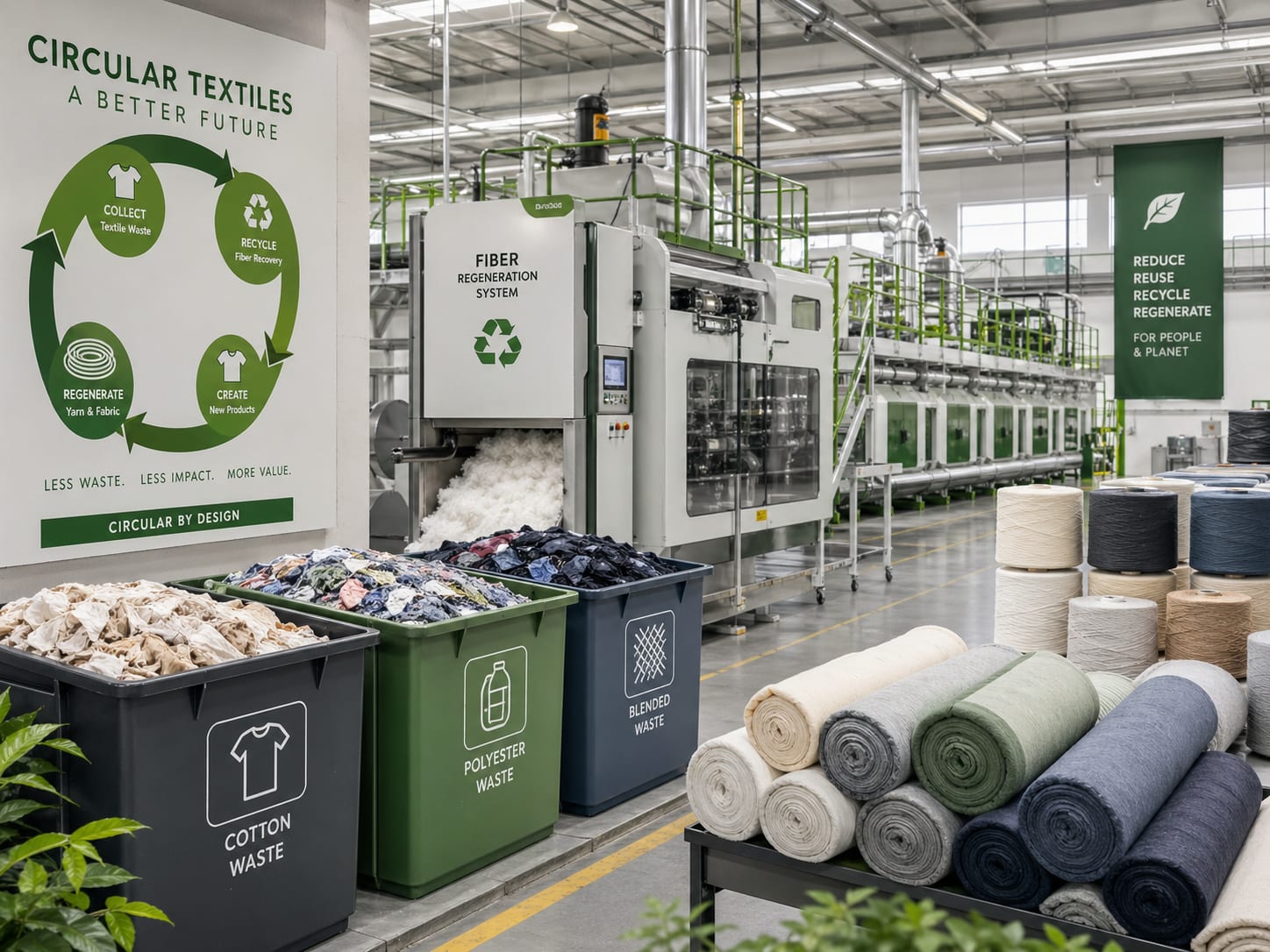
Key Circular Economy Models and Their Impact on Textile Sourcing
Circular economy in the textile industry focuses on extending the lifecycle of fabrics and garments. Instead of discarding products after use, materials are reused, repaired, recycled, or regenerated. Major models include recycling textile waste into new fibers, designing products for longer lifespans, implementing take-back programs, and sourcing sustainable materials. For example, some buyers specify interest in recycled polyester or regenerated cotton when placing bulk orders. Product life extension can involve working with suppliers who offer repair or refurbishment services, while take-back programs allow for the collection and recycling of used garments.
Fabric manufacturers play a critical role by investing in recycling technologies and sustainable raw materials. Collaboration between manufacturers, brands, and sourcing teams is key to building effective circular supply chains. Automation, digital tracking, and eco-friendly dyeing processes are also supporting greater transparency and waste reduction. By understanding these models, procurement professionals can better evaluate supplier capabilities and select fabrics that support both sustainability and consistent quality. Buyers should communicate their requirements for recycled content, durability, and end-of-life solutions when discussing bulk fabric needs.
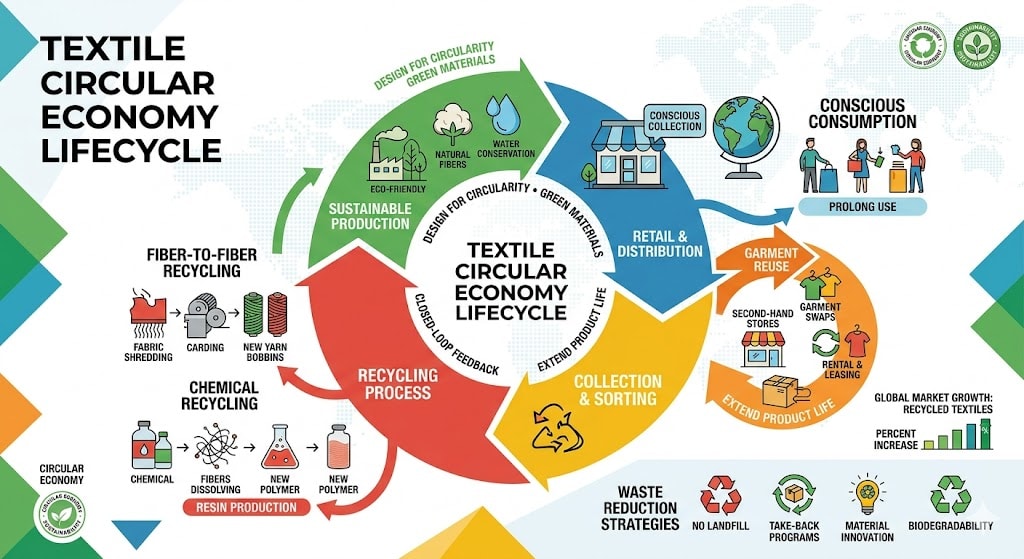
Integrating Circular Economy Principles into Your Fabric Sourcing
Adopting circular economy strategies helps B2B buyers reduce waste, improve efficiency, and meet evolving sustainability expectations. When sourcing fabrics, buyers should clearly specify their interest in recycled or regenerated fibers, product durability, and any take-back or reuse initiatives. Sharing details such as GSM, width, colour, quantity, and intended application enables suppliers like Amrita Global Enterprises to recommend suitable options. By aligning sourcing decisions with circular principles, procurement teams can support both environmental responsibility and long-term business value. Request fabric samples or send your inquiry to discuss circular fabric solutions for your next bulk order.
