
Learn how B2B fabric buyers can screen real silk, review supplier documents, request samples and use fibre testing before bulk sourcing.
Real Silk Verification Starts with a Sourcing Checklist
For a B2B buyer, “real silk” should be treated as a fibre-content claim that needs evidence, not as a conclusion based on shine or softness alone. Silk can look different after degumming, dyeing, washing and finishing, while polyester, nylon, viscose and blended fabrics may be engineered to imitate its lustre or drape. Begin by recording the supplier’s stated fibre percentages, fabric construction, GSM, width, finish, shade, intended garment use and required quantity. Compare the submitted sample with an approved reference in consistent lighting, and keep the sample identified by supplier, date and lot where available. A visual or touch check can help screen options, but it should not replace documentation or testing. Buyers reviewing the material’s wider performance context can also read about silk fabric properties for sourcing decisions.

Screen the Fabric, Then Verify the Fibre
Use a staged review so the level of verification matches the value and risk of the order.
- Appearance and handle: observe lustre, drape, surface texture and feel across the width. These clues may support a comparison, but finishes and filament construction can make natural and manufactured fibres look similar.
- Supplier documents: request a specification sheet or invoice stating fibre percentages, construction, GSM, width, finish, colour and sample or lot reference. Confirm that every document describes the same submitted fabric.
- Production sample: check the approved swatch against the pre-production or bulk sample for shade, handfeel, width, construction and measurable weight. Record any agreed tolerances before cutting begins.
- Laboratory identification: for higher-value orders, disputed composition or mandatory buyer compliance, use a qualified textile laboratory. Microscopy, FTIR and appropriate quantitative fibre-analysis methods can provide stronger evidence than household checks.
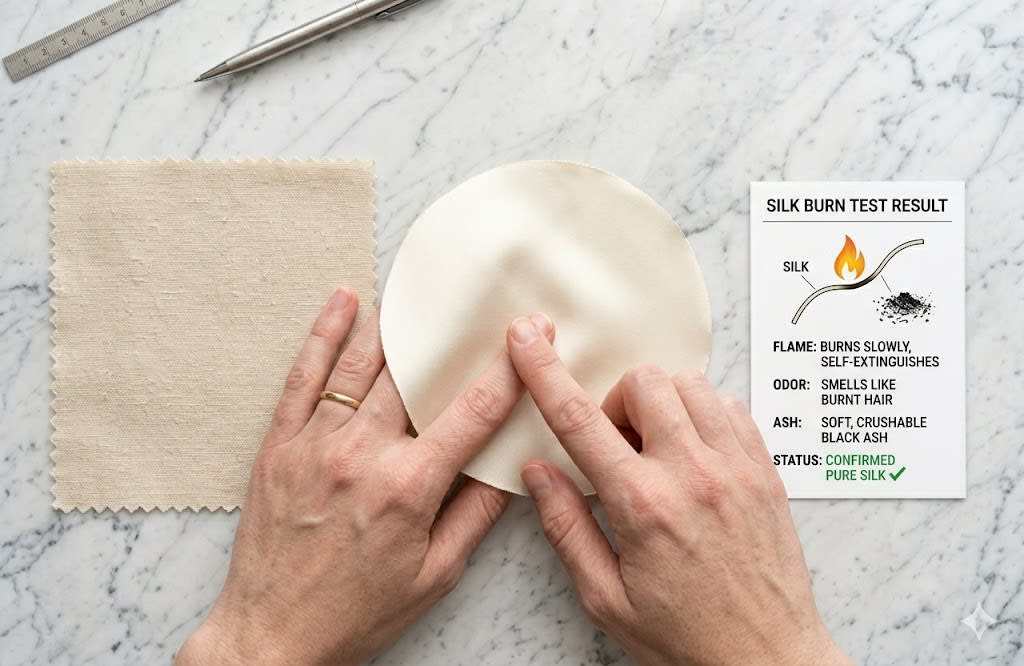
A burn test is destructive, creates a fire and fume risk, and may be misleading when the fabric contains blends, dyes or finishes. It should not be used as the main approval method for commercial sourcing.
Make Silk Fabric Approval Measurable Before Bulk Ordering
Before issuing a purchase order, define the fibre claim, construction, GSM, width, shade, finish, sample reference, testing requirement and garment application. State whether the order requires 100% silk or an accepted blend, and ask how fibre content will appear on the supplier’s documents. Price, softness or strong sheen cannot prove authenticity, so approval should be tied to the specification and an identified sample. For repeat orders, retain the approved swatch and test record so later lots can be reviewed on the same basis.
Amrita Global Enterprises (AGE) is an Ahmedabad-based B2B fabric manufacturer and supplier serving garment manufacturers, apparel brands, buying houses and sourcing teams. Buyers can review the bulk fabric catalogue and confirm whether a suitable silk or silk-blend option can be discussed for the application. To check availability, sampling, MOQ, price and dispatch details, Send Fabric Inquiry with the fibre claim, GSM, width, shade, quantity and end use. Request Fabric Samples before bulk approval.
