
Learn how B2B buyers can assess smart fabrics for apparel projects, from end use and construction to testing, sampling and supplier review.
Smart Fabrics in B2B Apparel Sourcing
Smart fabrics combine a textile structure with a functional system that can sense, respond or transmit information. Depending on the design, the function may come from conductive yarns, printed circuits, embedded sensors, coatings or other integrated components. For garment manufacturers, apparel brands and sourcing teams, the main challenge is not simply finding an innovative material. It is confirming whether the fabric, electronic element and finished garment can work together through cutting, stitching, wearing, washing and repeat production. Buyers should begin with the intended application, required function and user environment, then define the base fabric construction, composition, GSM for woven or knit options, width, stretch, shade and finish. This gives suppliers and development partners a practical brief instead of a broad request for “smart fabric.”
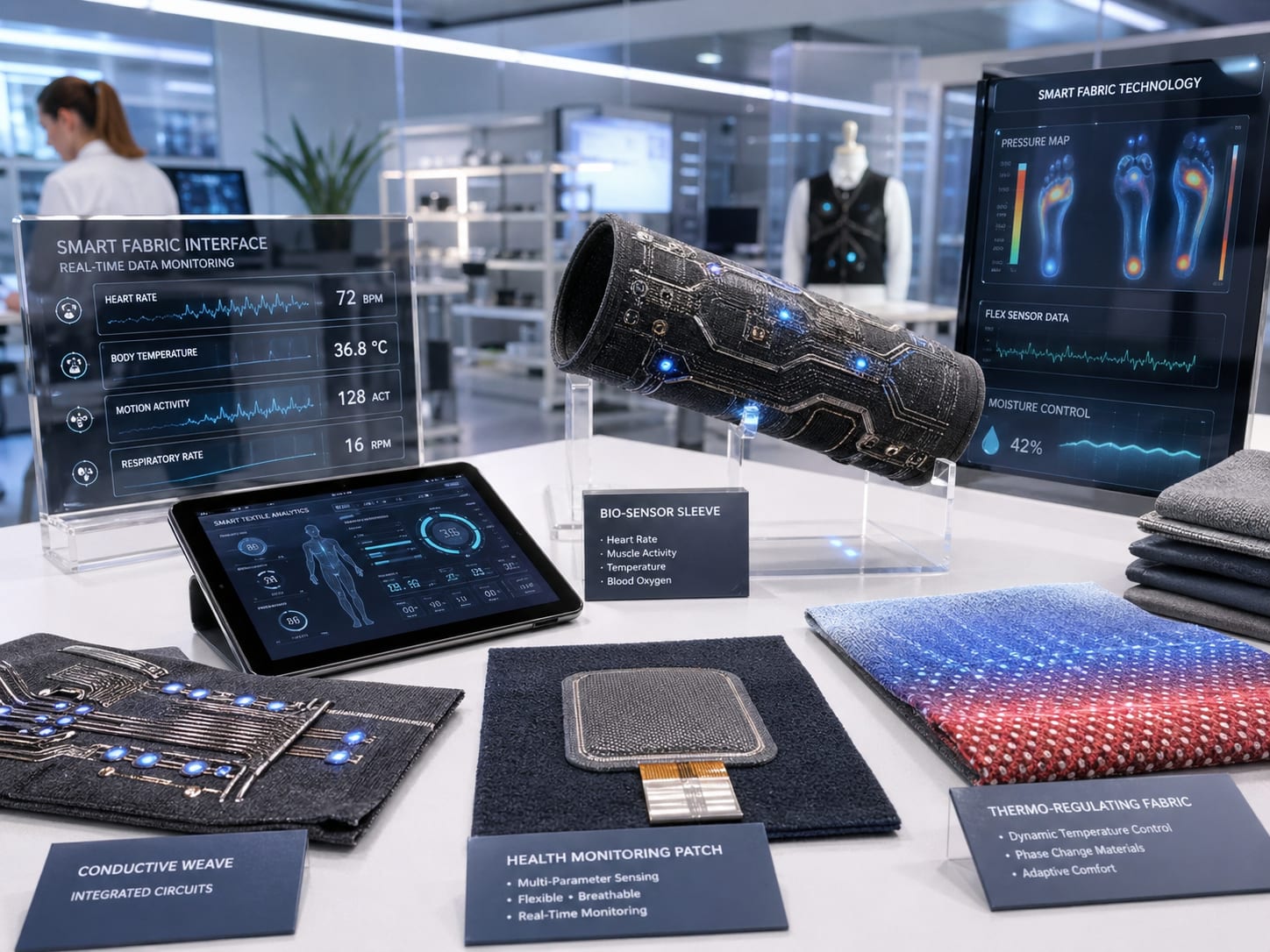
How Buyers Should Evaluate Smart Textile Options
A useful sourcing review separates the textile requirements from the technology requirements. The base material must suit the garment, while the sensing, heating, lighting or connectivity element must perform under expected use conditions. Ask how the functional component is integrated, whether it affects handfeel or flexibility, and what care method the finished product needs. Sampling should cover both fabric handling and system performance; a visually acceptable sample may still create problems during sewing, repeated flexing or laundering.
- Application: define the garment, wearer, operating conditions and exact function required.
- Construction: confirm composition, GSM, width, knit or weave, stretch, colour and finish without assuming that every option is available.
- Validation: request relevant test information for durability, washability, electrical safety or data performance when the application requires it.
- Scale-up: review component sourcing, production method, repeatability, inspection points, MOQ and dispatch planning before bulk approval.
For broader market context, buyers can read AGE’s guide to textile trends for B2B fabric sourcing and compare available bulk fabric categories.
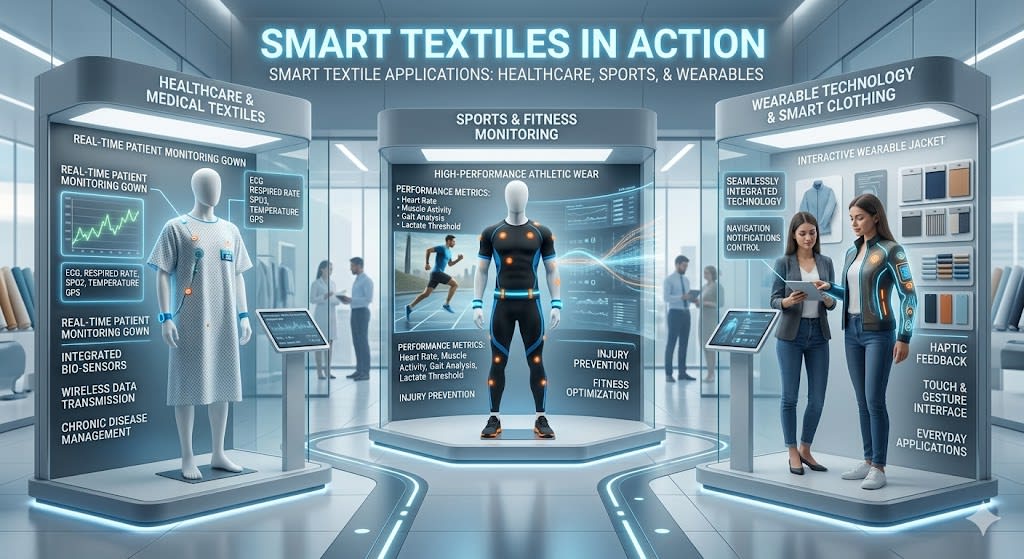
Build a Clear Development Brief Before Inquiry
Smart textile projects often involve more than one supplier, so responsibilities should be clear from the start. Confirm who provides the base fabric, functional component, integration process, testing and finished-garment assembly. Keep approved samples, specifications and revision notes aligned so later development does not drift from the original requirement. Amrita Global Enterprises (AGE) is an Ahmedabad-based B2B fabric manufacturer and supplier serving garment manufacturers, apparel brands, buying houses and sourcing teams. AGE should not be assumed to supply a particular smart textile or embedded technology unless that capability is confirmed for the inquiry.
To discuss a related fabric requirement, share the intended application, composition, GSM, width, construction, colour, finish, quantity and sample needs through the bulk fabric inquiry page. Use Send Fabric Inquiry or Request Fabric Samples so the team can review suitable fabric options, MOQ, sampling and dispatch details for the specific project.
