
Gain a practical overview of the textile production process, from fiber selection to finished fabric, to help sourcing teams make informed decisions and
Why the Textile Production Process Matters for Sourcing Teams
For procurement professionals and sourcing teams, understanding the textile production process is critical for making informed bulk fabric decisions. Each stage, from fiber selection to finishing, directly impacts fabric quality, consistency, and suitability for specific applications. Knowing how fibers are spun into yarn, how yarns are woven or knitted, and how fabrics are finished helps buyers assess which materials will meet their product requirements and performance standards. This knowledge also supports better communication with suppliers and more accurate specification of GSM, width, weave, and finish during the inquiry stage.
By being familiar with the production journey, buyers can anticipate potential challenges such as shade variation, shrinkage, or lead time issues. This enables more effective quality checks, sampling, and bulk approvals. For example, understanding the difference between woven and knitted fabrics, or the impact of different dyeing and finishing methods, allows sourcing teams to align fabric choices with end-use needs. A clear grasp of the process helps avoid costly mistakes and ensures that the final fabric meets expectations for apparel, uniforms, or other textile products.
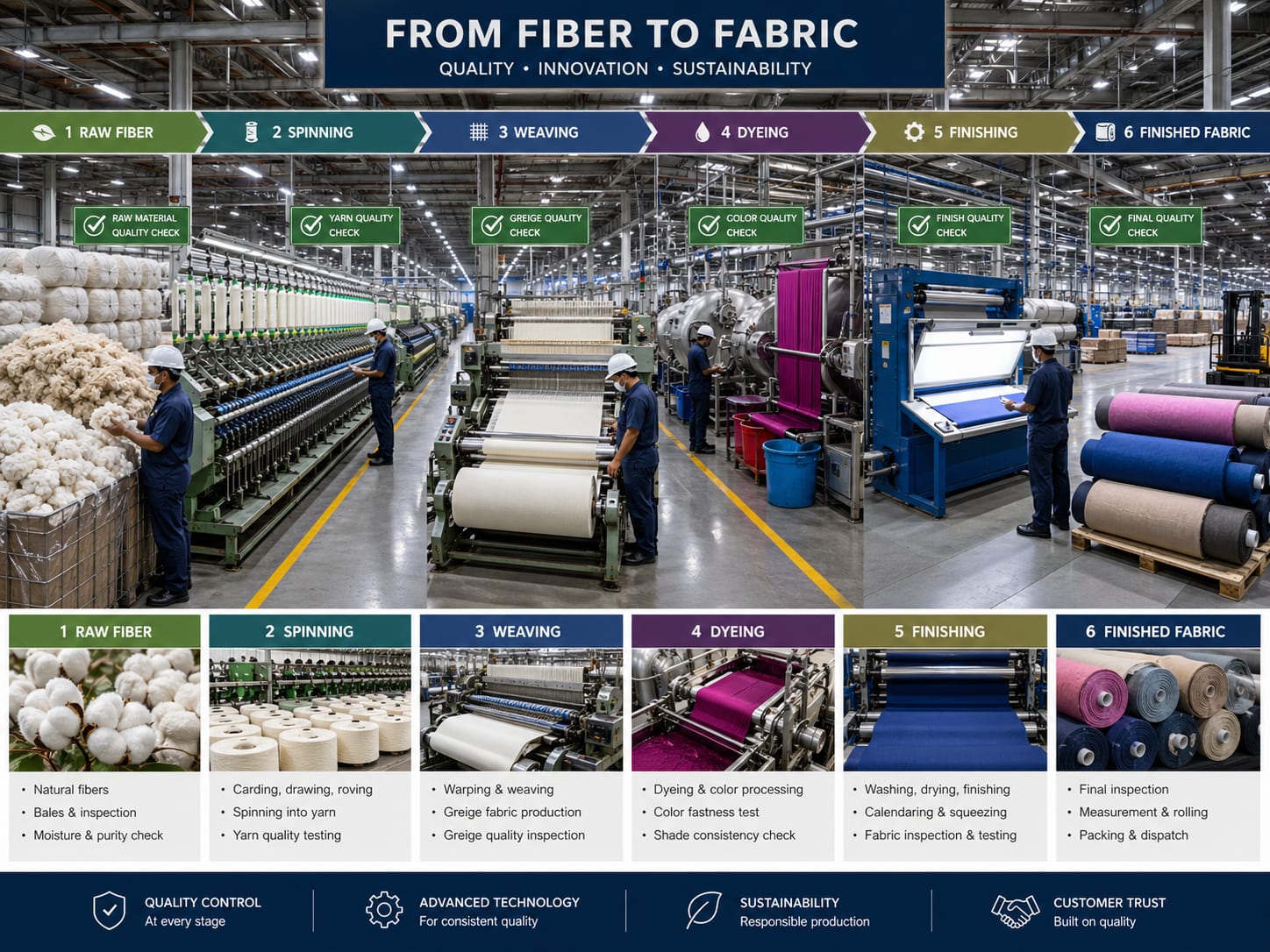
Step-by-Step Overview of the Textile Production Process
The textile production process consists of several main stages, each influencing the final fabric's characteristics. It starts with fiber selection—natural fibers like cotton and wool are valued for comfort and breathability, while synthetics such as polyester and nylon offer durability. Selected fibers are spun into yarn using methods like ring or open-end spinning, affecting yarn strength and consistency. Yarns are then converted into fabric by weaving (for structured fabrics) or knitting (for flexible, stretchable fabrics).
Pretreatment prepares the fabric for dyeing by removing impurities through processes like desizing, scouring, and bleaching. Dyeing can take place at the fiber, yarn, or fabric stage, while printing adds patterns using techniques such as screen or digital printing. Finishing treatments—like softening or water repellency—enhance fabric performance. Quality checks throughout these steps help ensure shade continuity and minimize defects, supporting buyers in meeting order requirements.
For sourcing teams, it's important to specify details like GSM, width, color, and end use when requesting samples or placing orders. Reviewing technical data and requesting swatches helps verify suitability. For example, referencing a product such as Majestica 705 Twill 100% Cotton 125gsm Dark Forest Green can clarify expectations with your supplier.
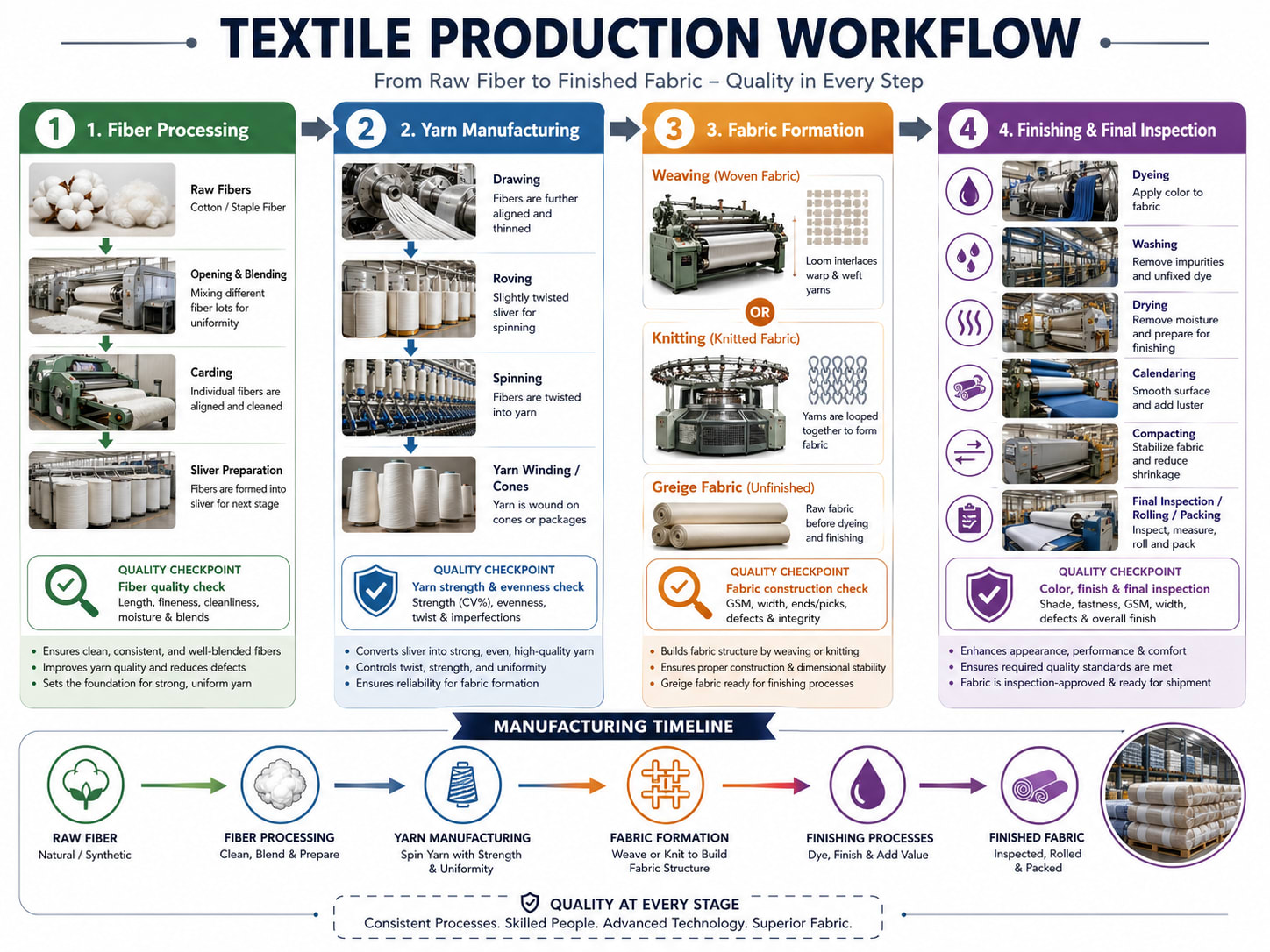
Making Informed Sourcing Decisions and Next Steps
For apparel brands, garment exporters, and sourcing professionals, a clear grasp of the textile production process is essential for success in bulk fabric procurement. Understanding each production stage—from fiber selection and spinning to finishing and inspection—enables buyers to specify requirements accurately and anticipate quality checkpoints. This reduces the risk of order discrepancies and supports consistent, repeatable results across production runs.
When reaching out to Amrita Global Enterprises, share your fabric requirements in detail, including GSM, width, color or shade, quantity, application, and any specific finishing needs. This information helps the team recommend suitable fabric options and streamline the sampling and approval process. To explore available woven and twill fabrics for your next project, you can review options such as Majestica 705 Twill 100% Cotton 125gsm. Send a fabric inquiry to discuss your bulk sourcing needs and request samples tailored to your application.
