
Compare cotton, stretch and blended poplin for shirts, dresses and uniforms, with practical checks on GSM, width, finish and bulk sourcing.
Which Poplin Works for Each Garment?
For many sourcing briefs, cotton poplin is considered for shirts and lightweight dresses, stretch poplin for fitted styles, and blended poplin for uniform programmes where care or wear requirements differ. That is a starting point, not a universal rule. The selected fabric must match the garment’s comfort, coverage, movement and appearance needs. Poplin has a closely woven, clean surface, but its handling can change with fibre composition, GSM, usable width, finish and added stretch. Dresses may also need checks for drape, opacity and lining, while repeat uniform orders require careful shade and specification planning. Start with the end use, target GSM, width, colour, finish, required movement and expected quantity. Buyers can compare the available woven fabric range and use this bulk garment fabric selection guide before requesting samples.
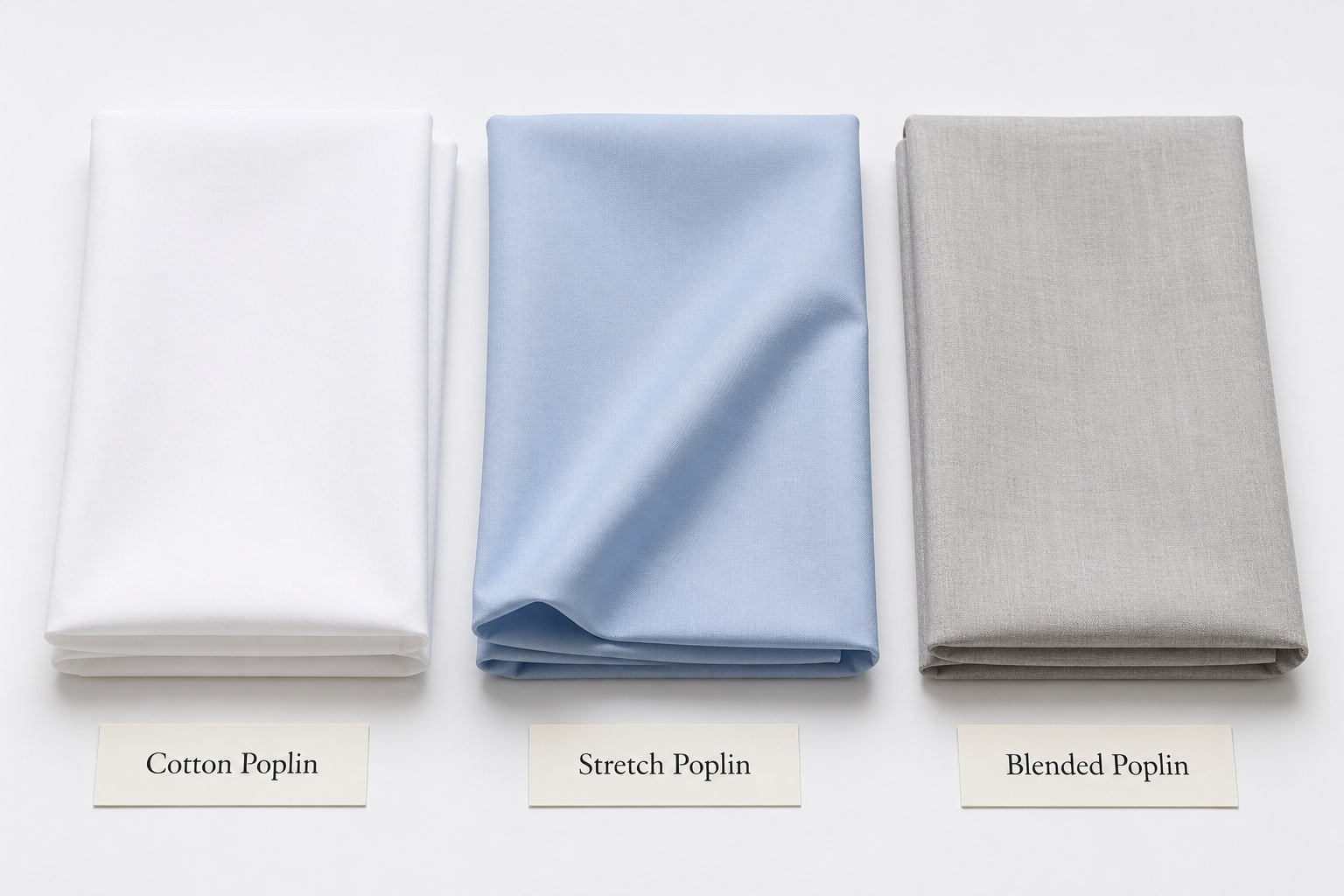
Comparing Cotton, Stretch and Blended Poplin
Each poplin type should be judged against production needs, not only handfeel or appearance.
- Shirts: Cotton poplin is commonly considered when buyers want a smooth woven surface and natural-fibre comfort. For fitted shirts, a stretch construction may support movement, but the exact composition and stretch recovery should be confirmed.
- Dresses: Lightweight poplin can suit structured or relaxed styles, depending on GSM, opacity and drape. Sampling helps determine whether the garment needs lining and how the fabric responds to gathers, seams and pressing.
- Uniforms: Cotton or blended poplin may be evaluated for comfort, maintenance and frequent-use requirements. Buyers should confirm composition, GSM, width, colour, finish and expected performance rather than assuming every blend is more durable or easier to care for.
For a specification-led reference, Nokia-615 cotton poplin is listed as 100% cotton, 125 GSM, 146 cm wide and plain/poplin weave. Treat it as one option, not a universal standard, and confirm current shade, sample, MOQ, pricing and dispatch details for the intended programme.
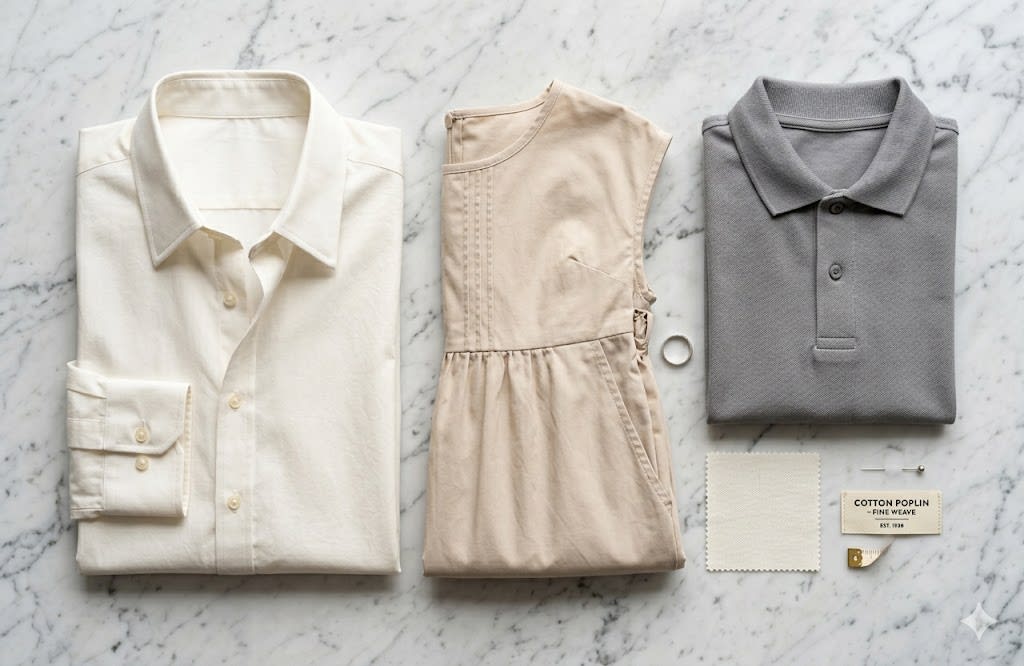
Build a Production-Ready Poplin Inquiry
A useful RFQ should state the garment application, preferred composition, target GSM, usable width, weave, colour, finish, stretch requirement, quantity and delivery destination. Add any sample size, testing, packing or repeat-order expectations that matter to the programme. During sample review, check surface evenness, shade, opacity, handfeel, drape, stitching response and whether the fabric suits the planned pattern and wash-care route. Keep approved sample references for later lot comparison, and ask the supplier to confirm availability, MOQ, sampling terms, packing and dispatch before purchase.
Amrita Global Enterprises (AGE) is an Ahmedabad-based B2B fabric manufacturer and supplier serving garment manufacturers, apparel brands, buying houses, wholesalers and sourcing teams. Buyers can review the bulk fabric catalogue, then Send Fabric Inquiry with the required GSM, width, colour, quantity and application so suitable poplin options and commercial details can be confirmed.
