
Learn how garment manufacturers can match fabric type, GSM, weave, comfort and durability needs before sampling and bulk sourcing.
Choosing the right fabric is a critical sourcing decision that impacts garment fit, comfort, durability, production efficiency, and final buyer satisfaction. For apparel brands, buying houses, and garment manufacturers, fabric choice involves more than appearance. It must align with the garment’s end use, stitching process, wash care requirements, seasonality, pricing strategy, and plans for repeat orders. Lightweight cotton fabrics are ideal for shirts and summer wear, while twill, denim, knits, or blended fabrics may better suit other production needs. Before confirming bulk fabric supply, sourcing teams should evaluate parameters such as GSM, fabric width, weave or knit structure, hand feel, shrinkage expectations, and shade requirements. A practical approach is to explore options in the bulk fabric catalogue and shortlist materials that meet the garment application before requesting samples.

Effective fabric selection connects material properties with production requirements. Woven fabrics are preferred where structure, shape retention, and precise stitching are essential, while knit fabrics offer stretch, softness, and flexibility for body movement. Cotton fabrics are valued for comfort and breathability; polyester and blends provide durability and easier care; denim and twill constructions are chosen for heavier casualwear, uniforms, or workwear. For shirts, tops, and light apparel, buyers may consider options like cotton poplin fabric for bulk sourcing. For uniforms or structured garments, a cotton twill woven fabric might be more appropriate. Sampling is essential to confirm texture, drape, stitching response, and shade before committing to larger orders. Buyers should also align fabric choice with MOQ, colour requirements, dispatch planning, and repeat order consistency to minimize production rejections and avoid last-minute material changes.
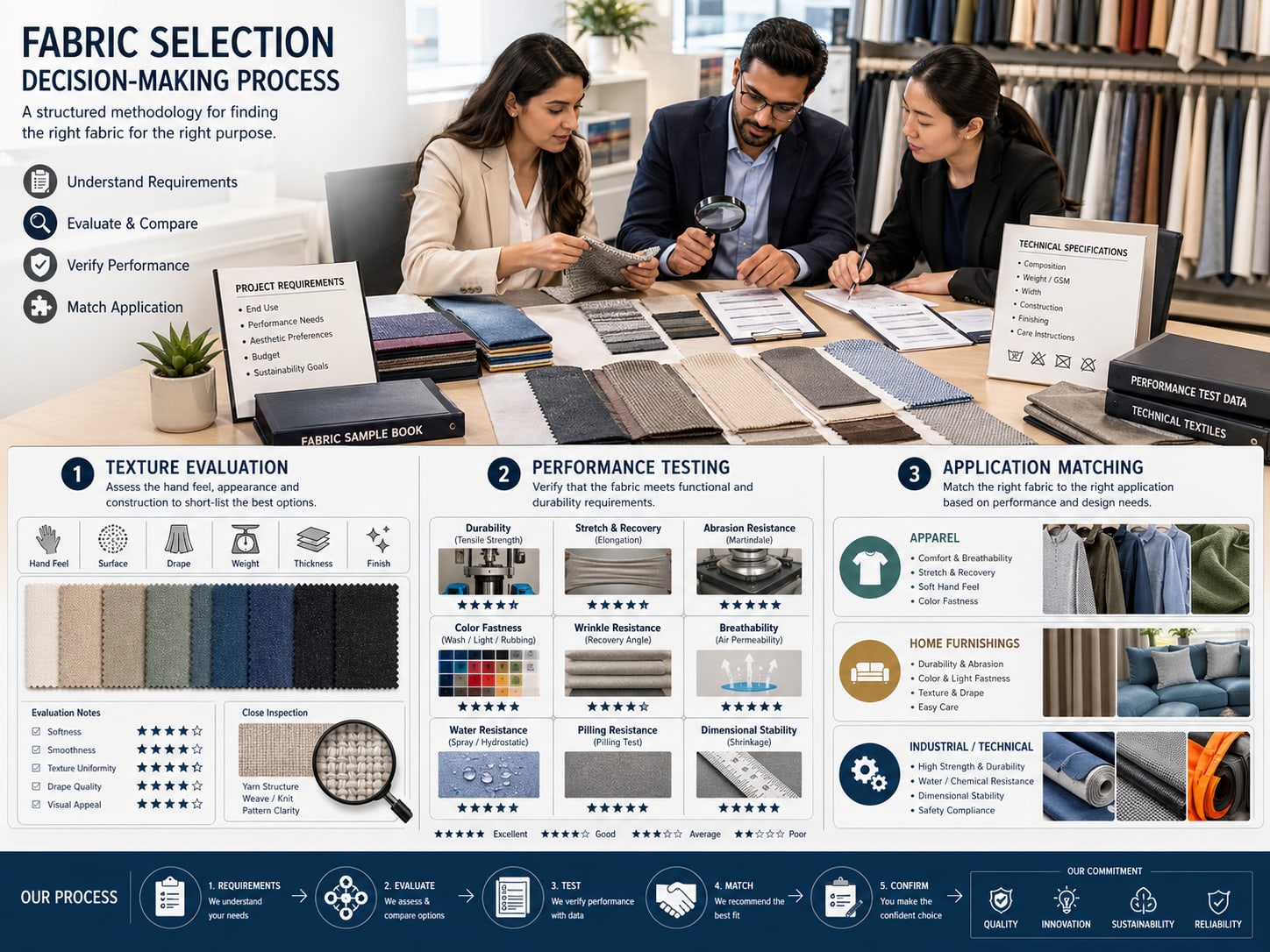
A reliable fabric selection process balances design intent with manufacturing realities. Instead of choosing fabrics solely by name, buyers should communicate garment use, target GSM range, colour preferences, quantity, finishing requirements, and production timelines. This enables fabric manufacturers to recommend suitable options for sampling and bulk order discussions. Amrita Global Enterprises (AGE) supports B2B buyers with sourcing-focused communication, fabric evaluation, and order coordination from Ahmedabad. Garment units and sourcing teams can also consult fabric order dispatch support to plan procurement effectively. To proceed, send fabric inquiry details including application, GSM, shade, quantity, and sampling needs so the right materials can be shortlisted for garment production and repeat supply planning.
