
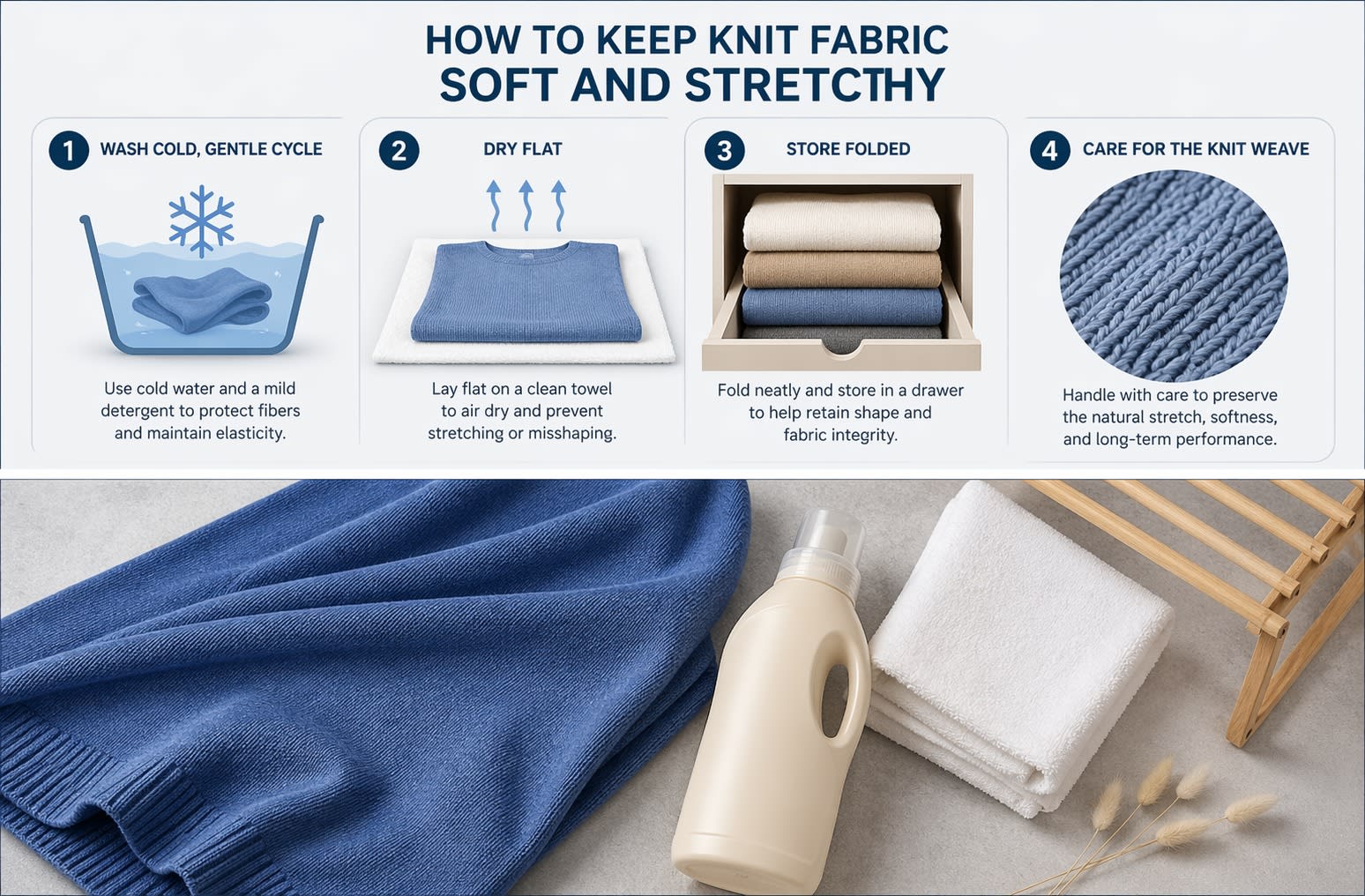
Keep knit fabric soft & stretchy by using gentle washing, air drying, and proper storage. Simple care habits help maintain its comfort, shape, & durability
Introduction to Knit Fabric Care
Knit fabrics are everywhere from your favorite t-shirts to cozy sweaters and activewear. There’s a reason we instinctively reach for them when comfort matters most. They stretch, breathe, and move with your body like a second skin. But here’s the catch: that same flexibility that makes knit fabrics so comfortable also makes them more delicate compared to structured materials.
Taking care of knit fabric isn’t about being overly cautious it’s about understanding its nature. Unlike rigid fabrics, knits are built from loops of yarn, making them prone to stretching, shrinking, or losing shape if treated carelessly. According to fabric care experts, heat, friction, and harsh detergents are the biggest enemies of knitwear, often leading to fiber damage and deformation .
So, if you’ve ever pulled your favorite sweater out of the wash only to find it misshapen or stiff, you’re not alone. The good news? With a few simple changes in your routine, you can keep your knit garments looking and feeling brand new for years. This guide breaks everything down in a practical, easy-to-follow way—no complicated laundry science required.
Why Proper Care Matters
Think of knit fabric like a spring. It stretches when you pull it and returns to shape when you release it at least when it’s healthy. But if you overstretch or expose it to heat repeatedly, that spring weakens. Over time, your garment loses its elasticity and starts to sag or shrink.
Proper care helps maintain shape, preserve softness, and extend lifespan. Experts highlight that avoiding excessive washing and heat can significantly reduce shrinkage, pilling, and fiber breakdown . In simple terms, how you treat your knit fabric determines whether it lasts months or years.
Common Problems with Knit Fabrics
Before we dive into solutions, it helps to understand the common issues people face:
- Stretching out of shape
- Shrinking after washing
- Pilling (those tiny fabric balls)
- Loss of softness
Most of these problems aren’t caused by poor-quality fabric they’re caused by everyday habits like overwashing or using high heat.
Common Mistakes to Avoid
Overwashing
Knits don’t need frequent washing. In fact, overwashing can weaken fibers and reduce elasticity. Many experts suggest airing garments between wears instead of washing them every time .
Using Too Much Fabric Softener
It might sound surprising, but too much fabric softener can actually harm knit fabrics. It coats the fibers, reducing breathability and causing buildup over time .
Rough Handling
Twisting, wringing, or scrubbing knit fabric can permanently distort its shape. Always handle gently—think of it as caring for something delicate, like a sponge rather than a towel.

Conclusion
Taking care of knit fabric isn’t complicated—it’s intentional. Once you understand how the material behaves, everything else falls into place. Gentle washing, low temperatures, careful drying, and smart storage can make a world of difference.
The beauty of knit fabric lies in its comfort and flexibility. With the right care, you don’t just preserve its look you preserve that feeling of comfort every time you wear it. Small habits, repeated consistently, are what keep your favorite pieces soft, stretchy, and reliable for years.
