
Compare knit construction, GSM, stretch, recovery and testing before bulk sourcing fabric for T-shirts, activewear, loungewear and innerwear.
Knit Fabric Sourcing Starts with the Garment
Knit fabric can support comfort, movement and fit, but those results depend on more than the word “knit.” Loop structure, yarn type, composition, GSM, width, finish and stretch behaviour all influence how the material performs during cutting, sewing, wear and washing. Garment manufacturers, apparel brands and buying houses should begin with the end use: a T-shirt, legging, polo, sweatshirt or innerwear style will not need the same density, recovery, surface or drape. The sourcing brief should state the target garment, required handfeel, GSM range, usable width, colour, finish, stretch direction and expected care method. This makes it easier to compare samples on production suitability instead of choosing only by softness. Buyers planning a broader specification can also use the bulk garment fabric selection guide to organise the first review.

Checks That Matter Before Bulk Knit Fabric Approval
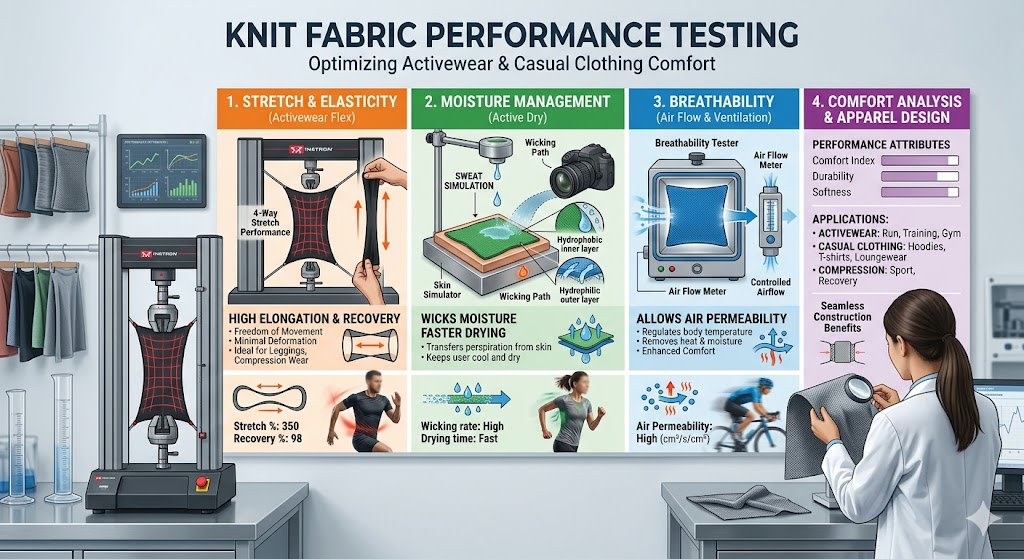
A useful sample review combines fabric specifications with garment-floor tests. Confirm the knit construction, composition, GSM, open or tubular width, usable width, shade, finish and roll presentation. Then measure stretch and recovery in the direction relevant to the pattern. Excess stretch may create cutting or sewing variation, while weak recovery can affect fit after wear. Buyers should also review dimensional stability, spirality or skew, pilling tendency, colourfastness, surface defects and shade continuity using test methods and tolerances appropriate to the intended garment. These results should be agreed before bulk approval rather than assumed from a small swatch.
- Cutting: check edge curl, relaxation time, lay stability and usable width.
- Sewing: assess needle response, seam stretch, puckering and feed behaviour.
- Wear: evaluate movement, opacity, recovery, abrasion points and handfeel.
- Repeat orders: record approved construction, GSM, shade, finish and performance criteria.
The live knit fabric category can be reviewed for current sourcing context, while exact availability and specifications should be confirmed for each inquiry.
Send a Knit Fabric Inquiry Buyers Can Act On
A clear RFQ helps the supplier respond with relevant options instead of general recommendations. Share the garment application, preferred knit construction, composition, GSM, width, colour, finish, quantity, delivery location and sample stage. Add any required stretch, recovery, shrinkage, pilling, colourfastness or care expectations, together with the method or tolerance your team will use for approval. For repeat programmes, identify the approved sample or reference lot and note which characteristics must remain consistent.
Amrita Global Enterprises (AGE) is an Ahmedabad-based B2B fabric manufacturer and supplier serving garment and textile buyers. Review the bulk fabric catalogue, then use Send Fabric Inquiry with your technical brief. Buyers may also request fabric samples for evaluation. Availability, MOQ, sampling, pricing, repeat-order suitability and dispatch details should be confirmed against the specific requirement.
