
Compare jersey, rib, interlock and French terry knits by GSM, stretch, structure and end use before sampling for bulk garment production.
Knit Fabric Types for Bulk Garment Production
Knit fabrics are formed from interlooped yarns, giving them a different balance of stretch, drape and recovery from woven constructions. For garment manufacturers, apparel brands and buying houses, the practical question is not simply which knit feels soft. The fabric must suit the garment pattern, sewing process, wear requirement and target cost. Single jersey, rib, interlock, French terry, pique and structured double knits can all serve different applications, but the name alone does not define production suitability. Buyers should compare composition, GSM, usable width, stretch direction, recovery, surface, finish, shade and expected care performance before approving a quality. Reviewing the knit fabric sourcing category can help frame the requirement, while samples and specification checks should guide the final bulk decision.
How Common Knit Constructions Differ
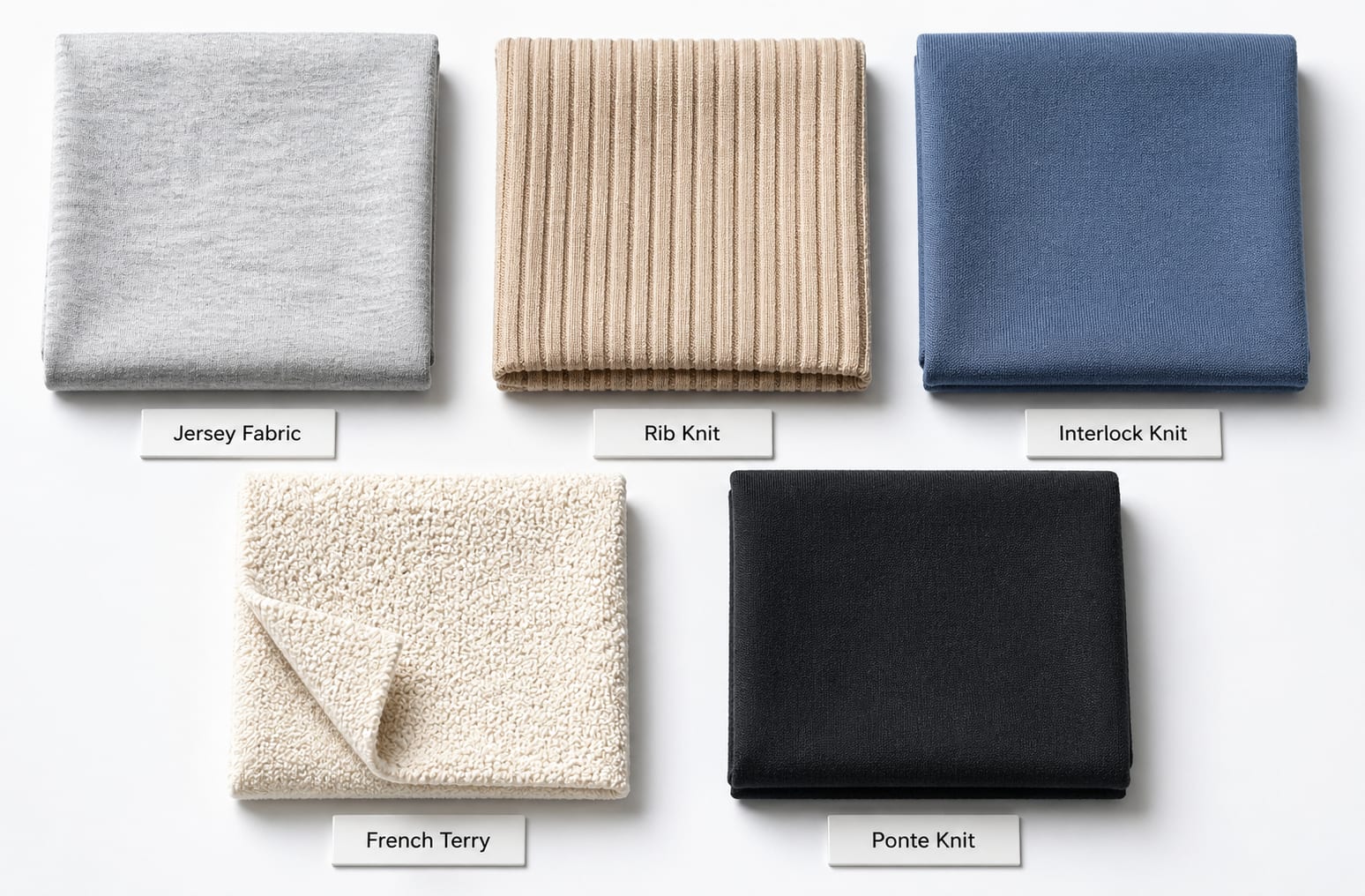
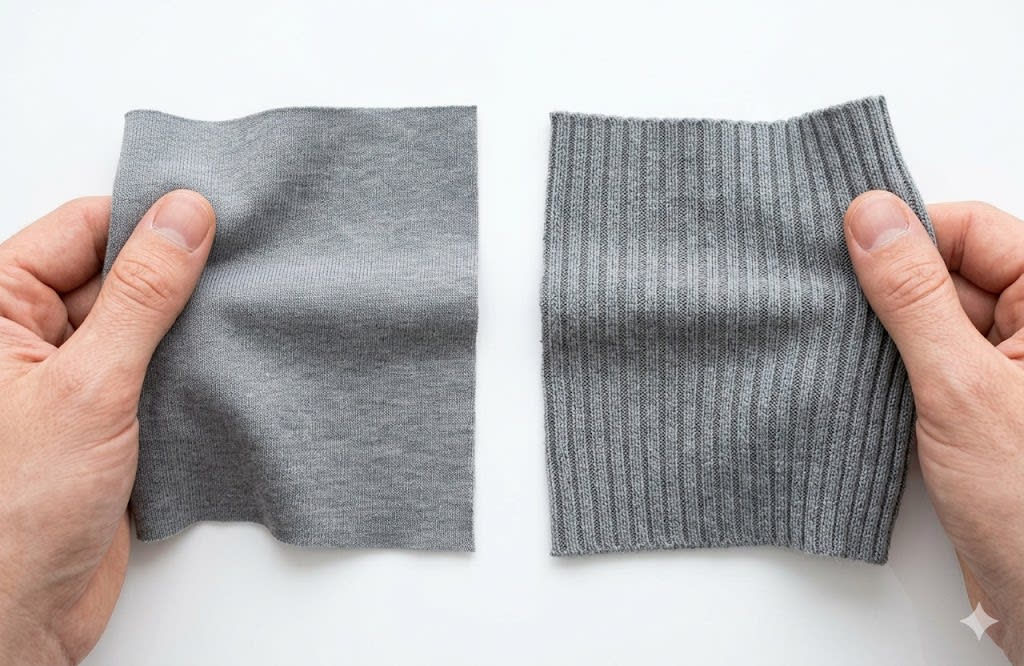
Single jersey has a smooth face and a more visibly looped reverse; it is widely considered for T-shirts, tops and lightweight casualwear, though cut-edge curling and recovery should be checked. Rib knit uses vertical ribs and is often selected where crosswise stretch and recovery matter, including neckbands, cuffs, waistbands and fitted pieces. Interlock is a double-knit construction with a smooth appearance on both sides and generally more stability and body than single jersey. French terry has a smooth outer face with loops on the reverse, making it a common option for sweatshirts, joggers and relaxed apparel. Pique offers a textured surface often associated with polo shirts, while ponte and other structured double knits may suit dresses, trousers and jackets where shape retention is important. Tricot and Raschel are warp-knit families used for specialised applications such as linings, sportswear, mesh or decorative effects. The fabric selection guide for bulk garment production provides a wider checklist for matching construction to end use. In every case, confirm the actual composition, GSM, width, stretch, finish and sample performance rather than relying on the fabric name.
Build an Inquiry-Ready Knit Fabric Specification
A useful knit fabric inquiry should state the garment application, preferred construction, composition, target GSM, width, colour or shade, finish, quantity and expected production schedule. Add any priorities for stretch, recovery, handfeel, shrinkage review, pilling review, sewing behaviour or repeat-order consistency. This gives the supplier enough context to discuss suitable options without assuming that every knit type or specification is available. Buyers can review the bulk fabric catalogue for the wider sourcing range.
Amrita Global Enterprises (AGE) is an Ahmedabad-based B2B fabric manufacturer and supplier serving garment and textile buyers. Exact availability, MOQ, sampling, pricing and dispatch details should be confirmed for each requirement. Use Send Fabric Inquiry or Request Fabric Samples, and include the technical and commercial details needed for a focused sourcing discussion.
