
Compare linen fabric types, blends, applications and key GSM, width, weave, finish and sampling checks before planning a bulk apparel order.
Linen Fabric Types for B2B Sourcing
Linen is a flax-based fabric, but the word “linen” on a quotation does not tell a sourcing team enough to approve material for production. Pure linen, linen blends, fine apparel linen, sheeting, damask, towelling and open-weave constructions can differ in handle, appearance, width, weight, care and sewing behaviour. Trade names also vary between suppliers, so garment manufacturers and apparel brands should treat the fabric type as a starting point rather than a complete specification. Before comparing prices or placing a bulk order, confirm fibre composition, GSM, usable width, weave, colour, finish, intended application and sample requirements. This helps buyers compare like with like and reduces the risk of approving a fabric that looks suitable in a small swatch but behaves differently during cutting, stitching, washing or repeat-order planning.

How Common Linen Categories Affect End Use
Pure linen: Ask for the declared fibre composition and evaluate the fabric for the required garment or home-textile application. GSM, yarn character, width, surface texture, finish and shade should be confirmed rather than assumed from the name.
Linen blends: Linen may be blended with cotton, viscose, polyester or other fibres. The exact blend ratio matters because it can change drape, creasing, dimensional behaviour, care requirements and cost. Buyers should request the full composition instead of accepting “linen blend” as the final specification.
Fine or handkerchief linen: These terms usually indicate a lighter, finer construction considered for shirts, blouses, scarves or accessories. Check opacity, seam performance and garment support during sampling.
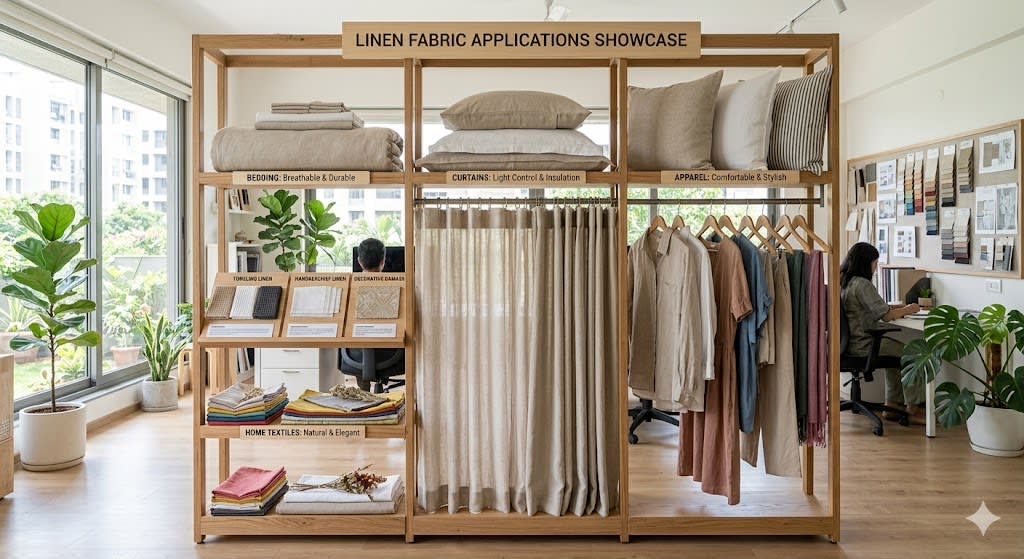
Sheeting, damask, towelling and open-weave linen: These names generally point to construction or intended use. Sheeting may be assessed for bedding or wide-width applications; damask for woven pattern and presentation; towelling for absorbency; and open weaves for airy decorative or apparel uses. In every case, approve against measurable specifications, a physical sample and the expected care process.
A Practical Linen Fabric Buying Checklist
For a useful supplier comparison, send one requirement sheet covering composition, GSM, width, weave or construction, shade, finish, end use, quantity, sampling need and delivery location. Ask whether the bulk fabric will match the approved reference for shade, handle and construction, and agree how any repeat order will be reviewed. A garment trial or wash trial may be appropriate before bulk approval, depending on the product and care method.
Buyers comparing linen with other woven options can review AGE’s woven fabric category, browse the bulk fabric catalogue and use the fabric selection guide for garment production. Amrita Global Enterprises (AGE) is an Ahmedabad-based B2B fabric manufacturer and supplier. For a linen or related woven requirement, Send Fabric Inquiry with complete specifications so availability, MOQ, sampling, pricing and dispatch details can be confirmed. Request Fabric Samples where evaluation is needed before bulk planning.
