
A practical B2B guide to evaluating linen fabric by composition, GSM, width, weave, finish, sampling and bulk garment-production needs.
What Linen Fabric Means for B2B Buyers
Linen is a bast-fibre textile made from flax. For garment manufacturers, apparel brands, buying houses and sourcing teams, the useful question is not whether linen is fashionable, but whether a particular construction suits the product, price point and production process. Linen fabrics are often considered for shirts, dresses, relaxed tailoring, resortwear and selected home-textile applications because buyers value their dry handle, visible texture and warm-weather comfort. However, two fabrics described simply as “linen” can behave very differently. Composition, GSM, width, weave, yarn character, colour, finish and blend ratio all affect drape, opacity, sewing performance and care requirements. Start with the end use, then compare the specification rather than choosing from a trend label alone.
Buyers reviewing production-ready woven options can also explore AGE’s woven fabric range for garment manufacturing.

Linen Styles and Specifications to Evaluate in 2026
For 2026 collections, sourcing teams may evaluate pure linen, linen-cotton blends, textured or slub constructions, lighter summer qualities and neutral or seasonal shades. These are sourcing directions, not proof that every option is available or suitable for every program. A linen-cotton blend may feel softer or crease differently from pure linen, but the result depends on the blend ratio, yarn, weave and finish. Textured linen can add surface character, while lighter constructions may support airy shirts, dresses and layering pieces; both require checks for opacity, seam stability and cutting loss.
- Composition: confirm fibre percentages rather than relying on a broad linen label.
- GSM and width: match fabric weight and usable width to the garment, marker plan and consumption target.
- Construction and finish: review weave, slub level, handfeel, shrinkage behaviour and surface appearance.
- Colour and repeat orders: approve shade references and discuss lot-to-lot expectations before bulk planning.
- Sampling: test cutting, stitching, pressing, washing and final garment appearance under the intended care method.
The fabric selection guide for bulk garment production provides a broader checklist for comparing materials before approval.
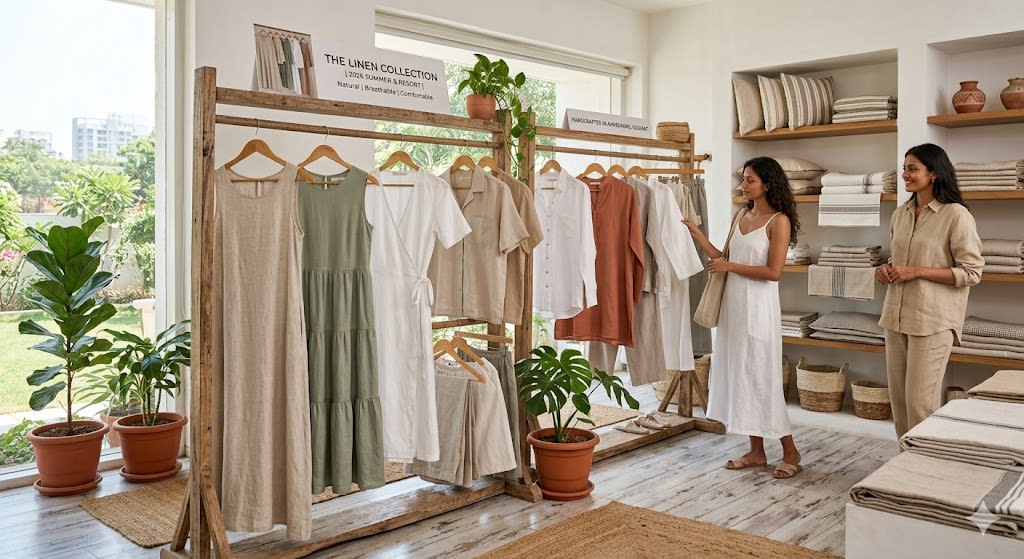
Prepare a Clear Linen Fabric Sourcing Brief
A strong inquiry gives the supplier enough information to assess suitability without guessing. Share the intended garment or end use, required composition or blend, target GSM, usable width, weave, colour, finish, quantity, sample stage and expected care method. Add any concerns about opacity, wrinkling, dimensional change, seam performance or repeat-order consistency. If a specific linen quality is not listed, do not assume stock, MOQ, price, certification, sample availability or dispatch timing; ask for confirmation against the exact requirement.
Amrita Global Enterprises (AGE) is an Ahmedabad-based B2B fabric manufacturer and supplier serving garment and textile buyers. Buyers can review the bulk fabric catalogue to compare available specifications. For a project review, use Send Fabric Inquiry or state that you would like to Request Fabric Samples. Include the specification and application so availability, MOQ, sampling, pricing and dispatch details can be confirmed for the inquiry.
