
See where polyester blends fit apparel, uniforms and home textiles, plus the GSM, construction, finish and sampling checks B2B buyers should confirm.
Where polyester blends fit in B2B fabric sourcing
Polyester blends are used across garment and textile programmes where buyers need to balance handle, durability, care requirements and commercial practicality. The blend name alone, however, does not confirm performance. A cotton-polyester fabric can behave very differently depending on fibre ratio, GSM, yarn, weave or knit structure, finish and intended end use.
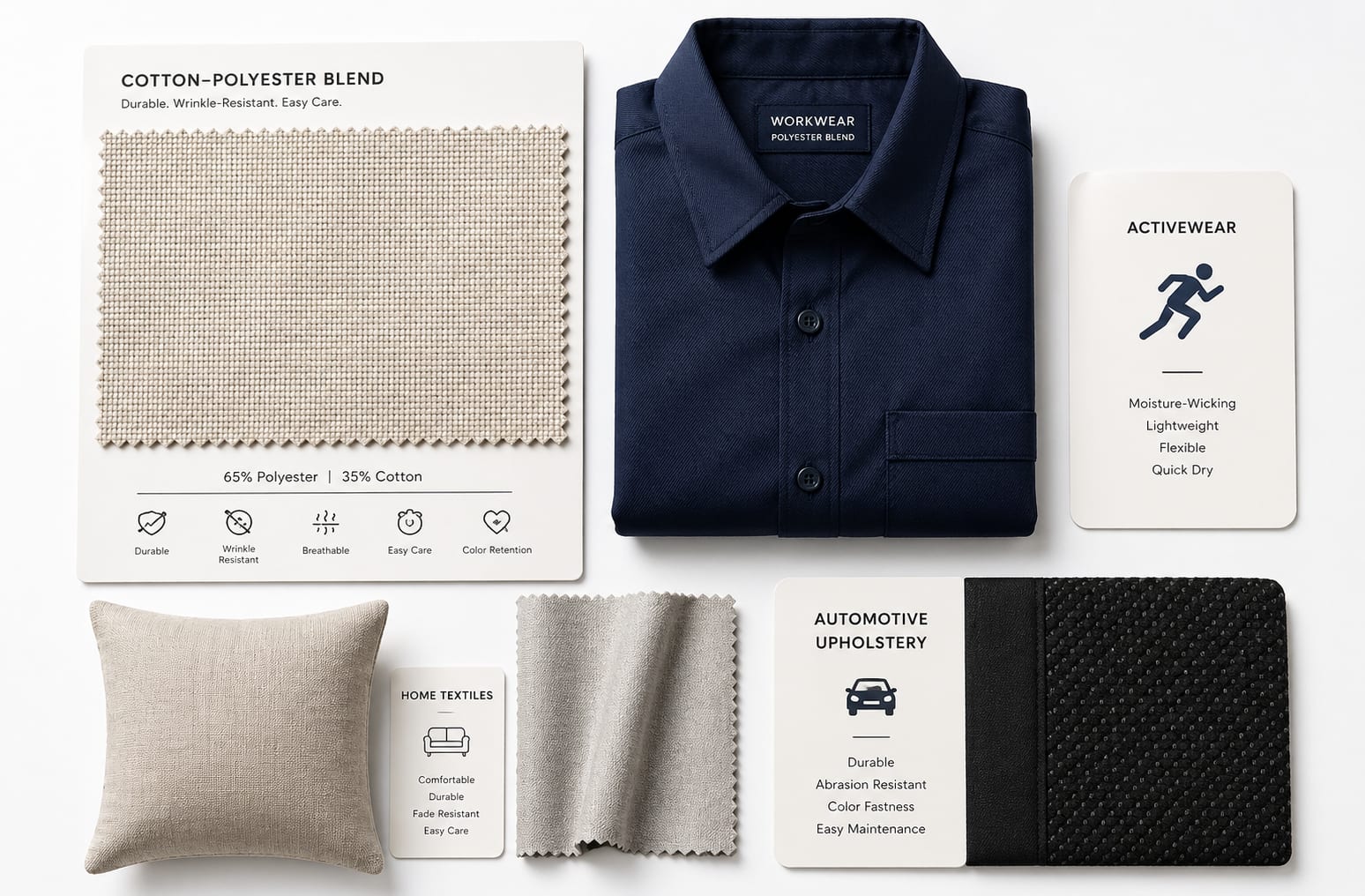
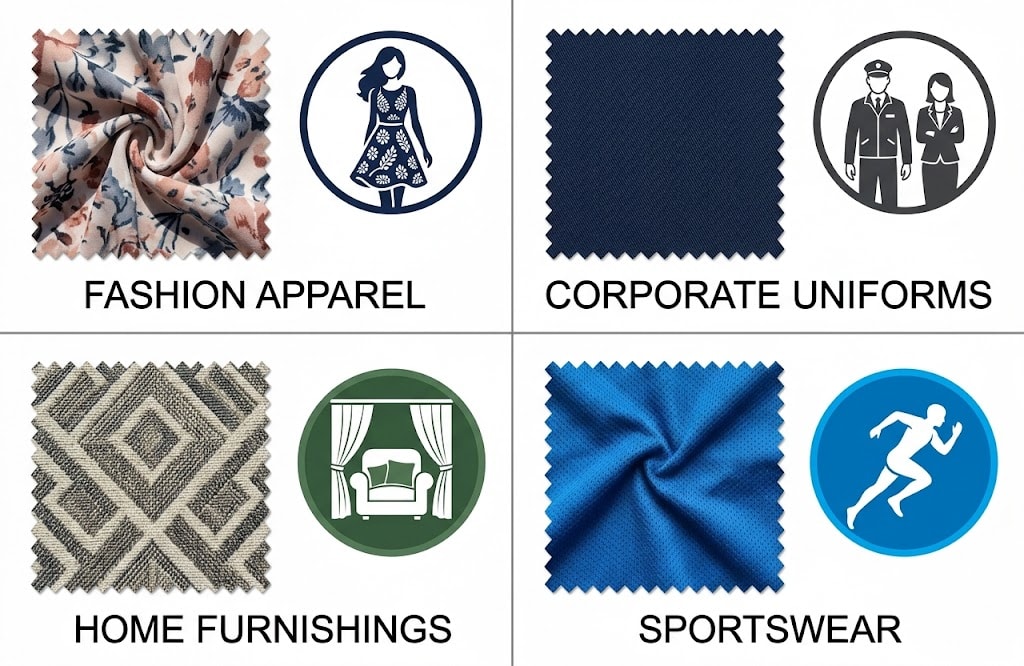
For apparel brands, garment manufacturers, buying houses and sourcing teams, the useful question is not simply which industry uses polyester blends most. It is whether a specific construction suits the product being made. Common areas include everyday apparel, uniforms, selected activewear, promotional garments and some home-textile applications. Buyers should compare the approved sample against stitching, drape, comfort, wash-care and appearance requirements before planning bulk supply.
Applications and checks before sampling
In shirts, trousers, dresses and workwear, cotton-polyester blends may be considered when a programme needs a practical balance of comfort, shape retention and easier care. Uniform buyers often prioritise repeat shade, abrasion exposure, laundering conditions and a consistent professional appearance. For active or promotional garments, the required stretch, moisture management, print method and surface finish should be confirmed rather than assumed from polyester content.
Home-textile buyers may assess blended woven fabrics for bedding, curtains or light furnishings, but suitability depends on the construction and the performance standard set for the product. Before shortlisting, ask the supplier to confirm:
- fibre composition and blend ratio;
- GSM, usable width and weave or knit construction;
- colour, finish, hand feel and stretch requirement;
- sampling route, MOQ and repeat-order expectations;
- tests or approval criteria required by the buyer.
The fabric selection guide for bulk garment production can help teams turn these points into a clearer sourcing brief.
Source the specification, not the blend label
Polyester blends are not automatically lower quality than pure fabrics, and they are not automatically the better choice. Quality depends on the fibre mix, construction, processing, finishing and how well the fabric matches the application. Buyers can reduce avoidable sampling rounds by sharing the garment type, target GSM, width, shade, quantity, finish and expected production use at the start.
Amrita Global Enterprises (AGE) is an Ahmedabad-based B2B fabric manufacturer and supplier serving garment manufacturers, apparel brands, buying houses, wholesalers, sourcing teams, fabric traders, importers and exporters. Buyers can review the bulk fabric catalogue and use the textile supply chain guide to prepare sampling and repeat-order questions. For availability, MOQ, pricing and dispatch discussion, Send Fabric Inquiry with the required composition, GSM, width, colour, quantity and application.
