
A practical B2B guide to specifying silk fabric, reviewing samples, checking production suitability and planning bulk garment sourcing.
Silk Fabric Sourcing Starts with the End Use
For garment manufacturers, apparel brands and buying houses, silk should not be sourced by appearance or a broad trade name alone. It is a fibre used in different constructions, and the resulting fabric can vary greatly in drape, opacity, surface character, stability and sewing behaviour. Start with the garment application, target handfeel, level of sheen, lining requirement, care route and expected wear conditions. Then define the fibre composition, weave, GSM, usable width, colour, finish and acceptable variation. Terms such as pure silk and raw silk may be used differently across suppliers, so the purchase specification should state exactly what the buyer expects instead of relying on the label. Buyers comparing silk with other materials can first review this guide to fabric types for bulk sourcing.

Review Silk Samples for Production, Not Just Presentation
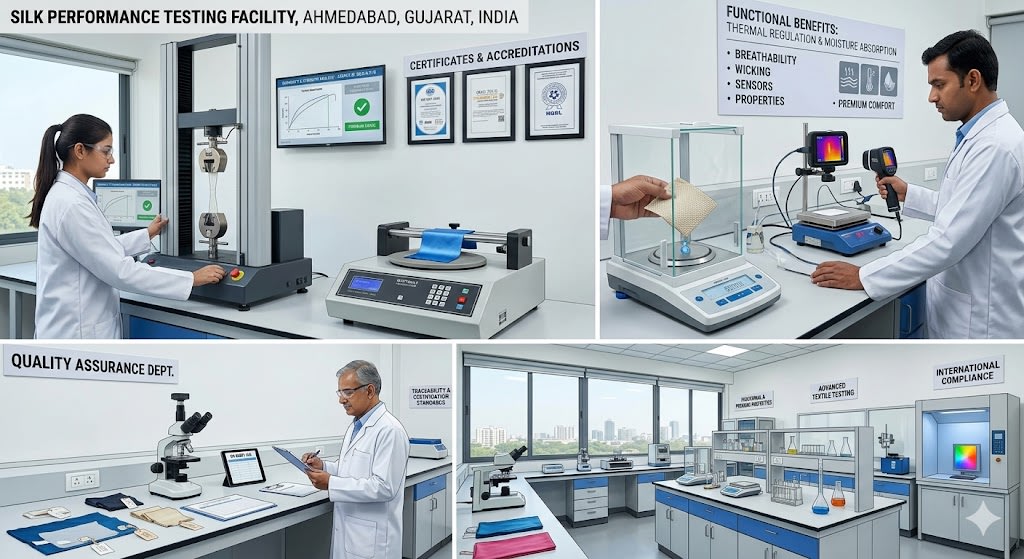
A silk sample may look suitable on a swatch card but behave differently during cutting, stitching, pressing or care. Ask the supplier to confirm composition, construction, GSM, usable width, finish, shade reference and the intended care method. For colour programs, agree how lab dips, strike-offs or approved swatches will control bulk shade. The evaluation plan should match the garment: lightweight or smooth constructions may need checks for seam slippage, snagging, fraying, needle marks and puckering, while structured options may require review of drape, crease response and pressing conditions. Where performance matters, set methods and acceptance limits for colourfastness, dimensional change, tensile or tear strength, abrasion and care-cycle behaviour rather than accepting a quality statement.
- Confirm identity: fibre content, construction and supplier terminology.
- Confirm production fit: cutting, seam, needle, interlining and pressing trials.
- Confirm appearance: shade, lustre, slubs, surface variation and opacity.
- Confirm repeatability: approval reference, tolerances and repeat-order discussion.
The broader fabric selection guide for garment production can help teams connect these checks with end-use requirements.
Build a Clear Silk Fabric RFQ Before Bulk Discussion
A useful RFQ should include the intended garment, composition requirement, weave or reference sample, GSM, width, colour, finish, quantity, delivery location and sampling stage. Add any testing, labelling, packing or documentation requirements before quotation so they can be reviewed with the fabric specification. Buyers should also ask how MOQ, shade approval, repeat orders, sample availability, pricing and dispatch planning will be handled for the exact requirement; none of these should be assumed from a generic silk description.
Amrita Global Enterprises (AGE) is an Ahmedabad-based B2B fabric manufacturer and supplier serving garment and textile buyers. Silk availability is not universal and must be confirmed for each inquiry. Buyers may review AGE’s current bulk fabric catalogue for listed options or use the bulk fabric inquiry page to share a silk reference or request a suitable alternative. Select Send Fabric Inquiry or Request Fabric Samples and include the technical details needed for an accurate sourcing discussion.
