
Compare common linen fabric types, blends, constructions and sourcing checks for garment production, sampling, bulk orders and repeat requirements.
What buyers mean by linen fabric types
Linen is a textile made from flax fibre, but “linen fabric” in the market can describe different fibre contents, weaves and finishes. For garment manufacturers, apparel brands and sourcing teams, the name alone is not enough to approve a material. The useful starting point is to separate 100% linen from linen-cotton, linen-viscose and linen-polyester blends, then check the construction, GSM, width, colour, finish and intended garment.
Pure linen is generally selected for its dry handle, breathability and characteristic surface variation. Blends can change drape, crease behaviour, softness, care needs and cost, depending on the fibre ratio and processing. Buyers should therefore request the exact composition rather than relying on terms such as “soft linen” or “polyester linen.” A sample should be evaluated against the required look, feel and production method before bulk confirmation.
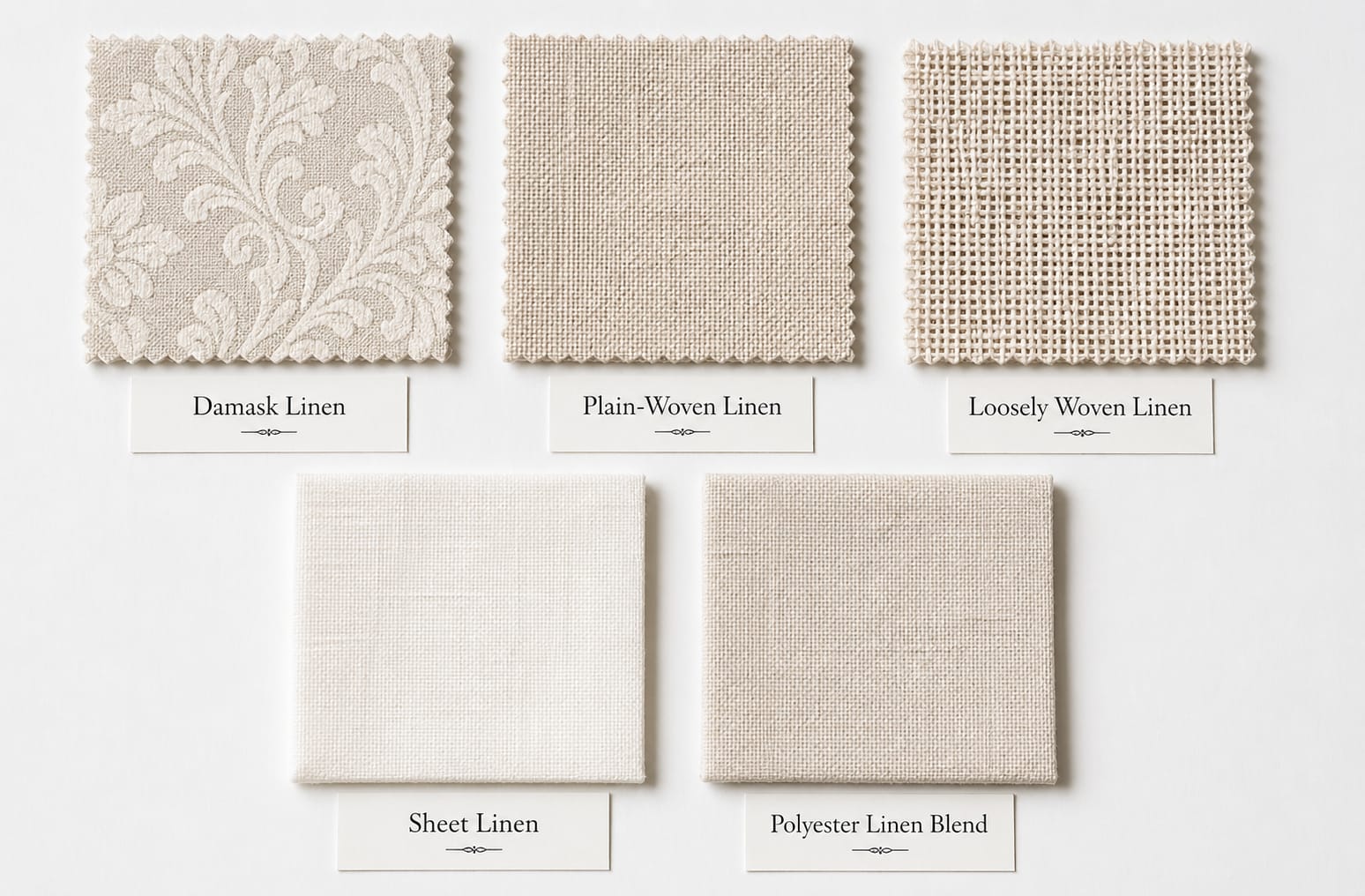
Common linen constructions and where they fit
Plain-woven linen is widely considered for shirts, dresses, trousers, co-ord sets and other apparel where a clean, breathable woven structure is needed. Damask or jacquard linen uses woven motifs and is more relevant when surface design is part of the product brief. Open or loosely woven linen has a more open structure, so buyers should check stability, transparency and seam performance for the intended use. Sheeting linen is made with a comparatively even construction and is commonly associated with bedding and home-textile applications.
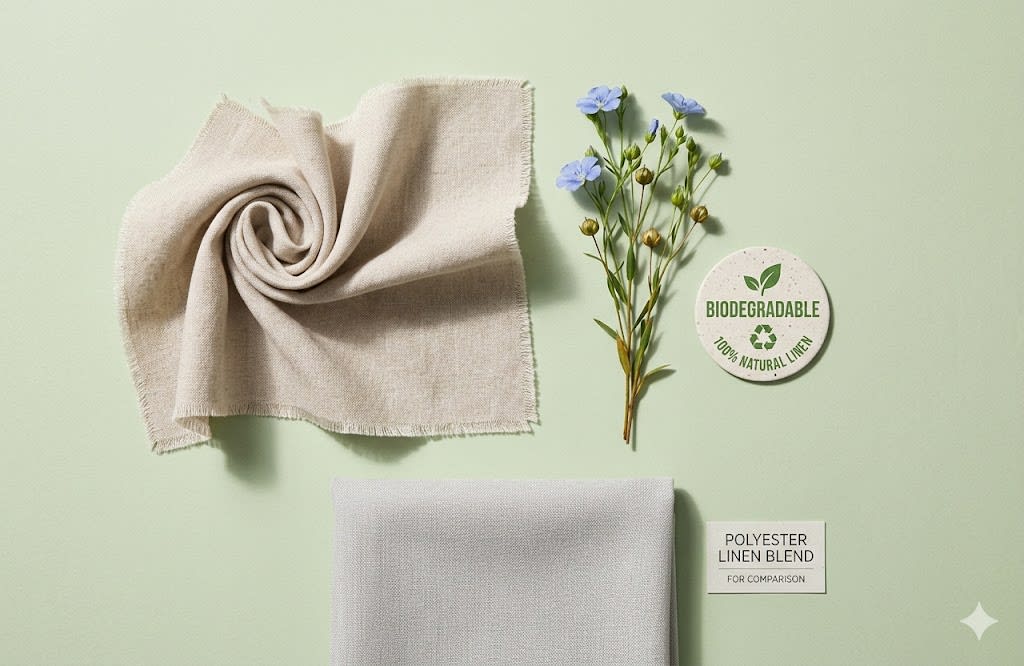
Blended linen should be judged by its actual composition. Linen-cotton may offer a familiar cotton hand with visible linen character; linen-viscose can provide a softer drape; and linen-polyester can alter crease recovery and care performance. These are broad tendencies, not guaranteed results. During sourcing, compare GSM, usable width, weave, opacity, shrinkage expectations, colourfastness requirements, finish, hand feel and wash care. Review the fabric after cutting, stitching and washing, and use the bulk garment fabric selection guide to structure sampling decisions.
A practical B2B linen sourcing checklist
Before requesting a quote, prepare a clear specification: fibre composition, target GSM, usable width, construction, shade or print, finish, quantity, garment application and delivery location. Ask whether the sample represents the intended bulk quality and how repeat shade or construction requirements will be handled. A fabric that looks suitable on a swatch may behave differently during spreading, cutting, sewing, pressing or washing, so production testing matters.
Amrita Global Enterprises (AGE) is an Ahmedabad-based B2B fabric manufacturer and supplier. Buyers can review the woven fabric range and bulk fabric catalogue for currently listed materials. Linen and linen-blend availability, MOQ, sampling, price and dispatch details should be confirmed against the specific inquiry. Share your requirement through Send Fabric Inquiry so suitable options can be checked without assuming that every linen type is available.
