
A practical cotton fabric sourcing guide for garment buyers comparing GSM, width, construction, finish, samples, MOQ and repeat-order needs.
Why cotton still matters in garment production
Cotton is used in woven and knitted constructions for many garment programs. The useful question for a buyer is not whether cotton is universally better than another fibre, but whether a specific cotton fabric suits the required drape, hand feel, appearance, wash care, sewing performance and price target. Shirts, uniforms, dresses, casualwear and other products can all use cotton, yet each application may need a different GSM, width, construction or finish.
Amrita Global Enterprises (AGE) is an Ahmedabad-based B2B fabric manufacturer and supplier serving apparel brands, buying houses, wholesalers and sourcing teams. For bulk procurement, broad descriptions such as “soft cotton” or “premium fabric” are not enough. A usable sourcing brief should state composition, GSM, width, weave or knit structure, shade, finish, quantity and intended garment so sampling, MOQ, repeat requirements and dispatch can be discussed against the actual requirement.
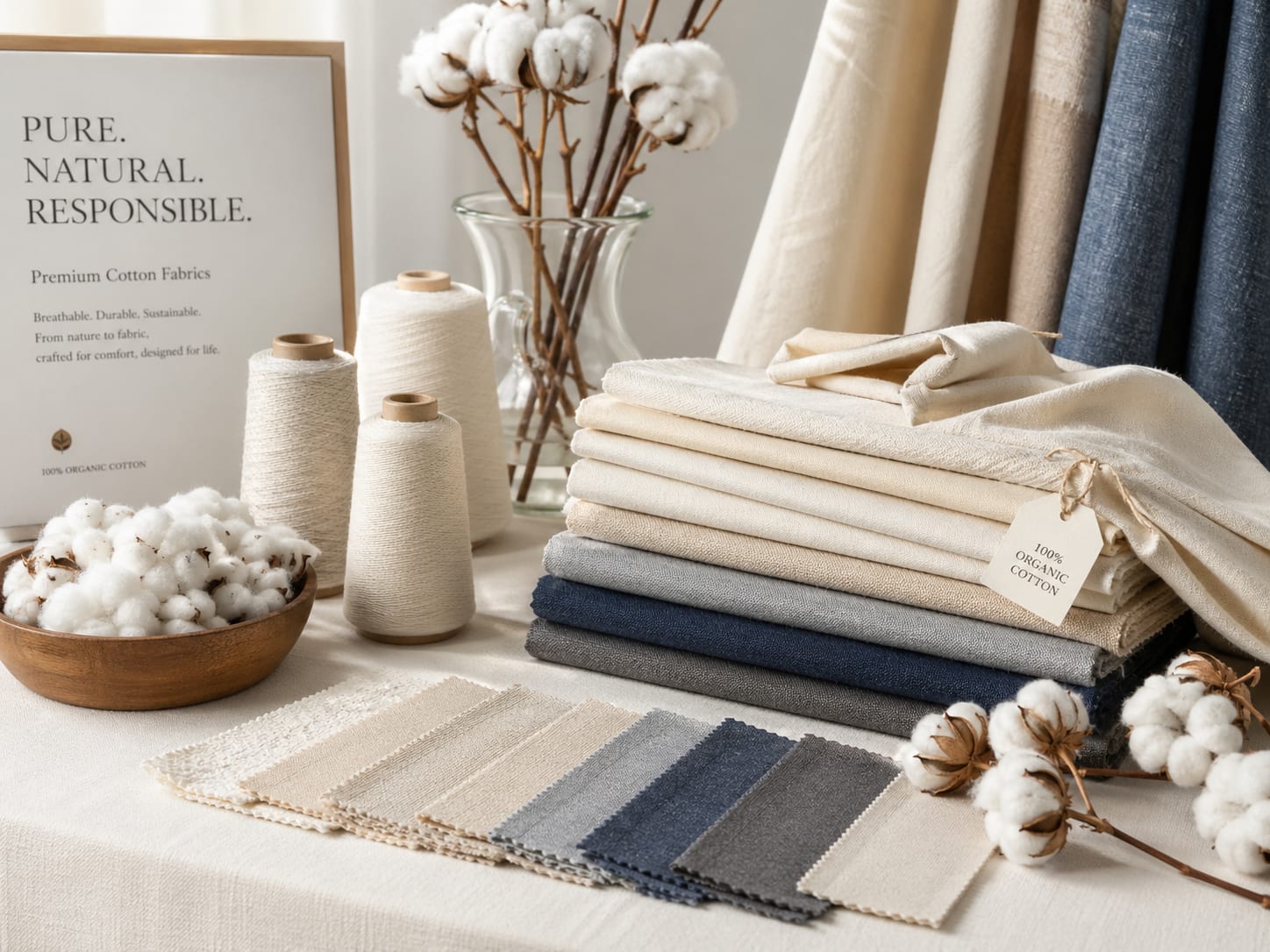
How to evaluate cotton fabric before bulk purchase
Start with the garment application, then work backwards to the fabric specification. A lightweight shirting and a structured bottom-weight fabric may both contain cotton, but they should not be evaluated by fibre name alone. Compare the following details before approving a sample:
- Composition: confirm whether the fabric is 100% cotton or a blend, because the blend can affect stretch, care and performance.
- GSM and width: use the stated GSM to judge weight and handling, and confirm usable width for marker planning and consumption.
- Construction: review plain weave, poplin, twill or knit structure in relation to drape, opacity, surface and stitch behaviour.
- Shade and finish: define the required colour and finish, then compare the approved sample with the intended garment process.
- Bulk suitability: ask how sampling, MOQ, packing, repeat shade review and dispatch will be handled for the planned quantity.
Buyers can review the bulk fabric catalogue, compare woven cotton fabric options, and use the Nokia-615 cotton poplin listing as an example of a product page that presents composition, GSM, width, weave and finish for sourcing review.
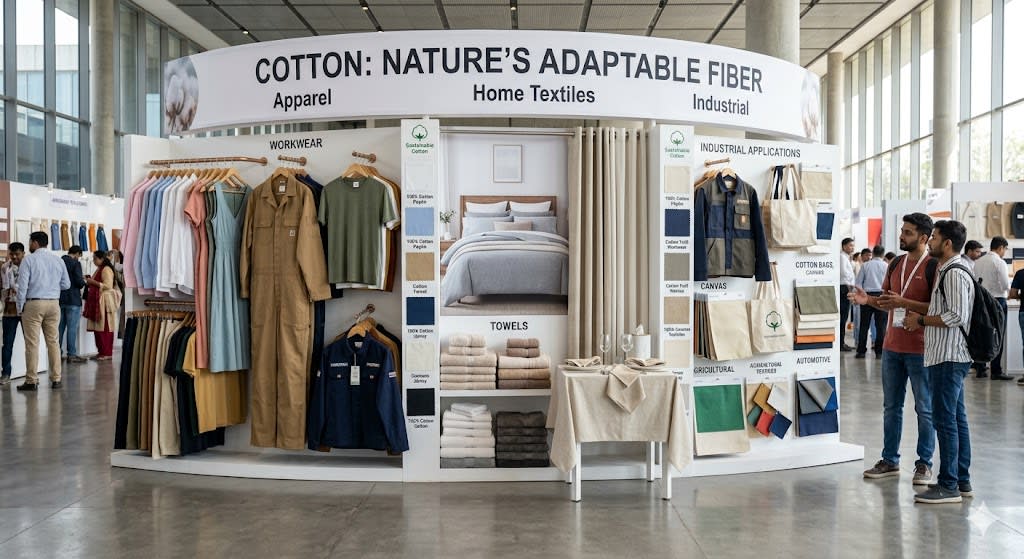
Turn fabric interest into a clear buying decision
A practical inquiry should include the intended garment, composition, GSM, width, construction, colour, finish, order quantity, sample requirement and delivery destination. Add any buyer-specific testing or documentation requirement that must be checked. This helps the supplier confirm suitable options without assuming that every cotton fabric, MOQ, shade or dispatch schedule is available for every order.
For repeat programs, retain the approved swatch, specification sheet, shade reference and finish details, then reconfirm them before placing the next order. Sampling and pre-production review are especially useful when the garment has strict appearance, shrinkage, care or sewing expectations. For more context, read the guide to fabrics shaping Indian textile sourcing. To discuss a live requirement with Amrita Global Enterprises, Send Fabric Inquiry with the target specifications so availability, sampling, MOQ, pricing and dispatch can be confirmed.
