
A practical B2B guide to evaluating polyester blend fabrics by composition, GSM or oz, width, construction, finish, sampling and bulk suitability.
Polyester Blend Fabric for B2B Garment Programs
Polyester blend fabric is not one fixed specification. Its suitability depends on what polyester is blended with, the blend proportion, fabric construction, weight, width, finish, shade and intended garment. For garment manufacturers, apparel brands and buying houses, the sourcing question is not simply whether a blend is “better” than a pure fibre. The practical question is whether the fabric matches the required comfort, appearance, care, durability and production needs.
Start with the end use. Shirting, uniforms, workwear, casualwear, linings and bottomwear can require very different constructions and performance priorities. For woven or knitted fabrics, confirm GSM; for denim, confirm oz. Then review width, weave or knit structure, stretch requirement, surface feel and finishing. Buyers can begin by comparing options in the bulk fabric catalogue before requesting a specification-level discussion.
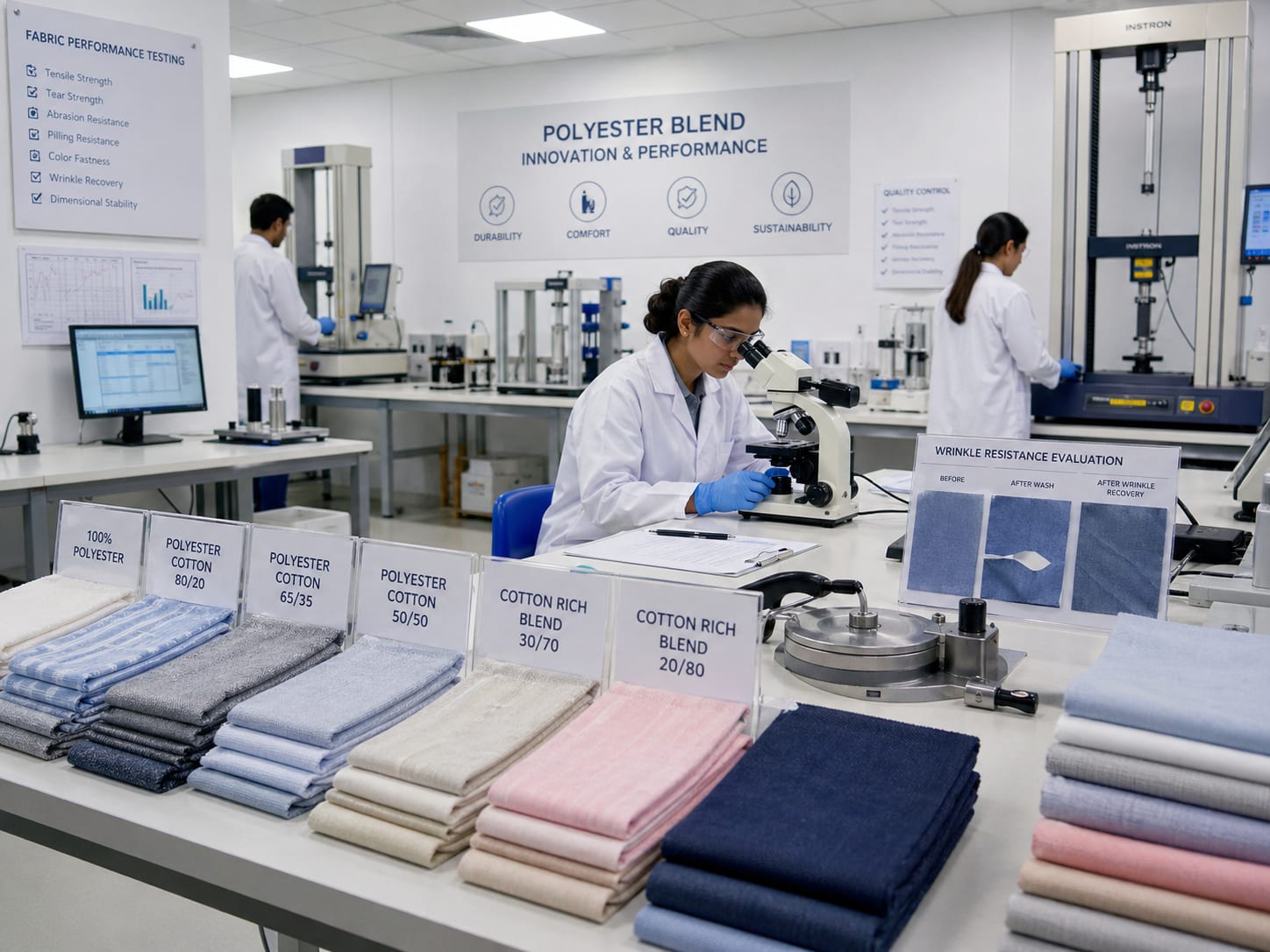
How Buyers Should Evaluate Polyester Blends
A polyester blend should be judged against the garment brief, not by fibre name alone. A higher polyester share may suit easy-care or strength requirements, while a higher natural-fibre share may be preferred where hand feel or moisture comfort matters more. Results still depend on yarn, construction, weight and finish, so blend percentage should not be reviewed in isolation.
- Composition: confirm exact fibre percentages instead of accepting a general “poly-cotton” description.
- Weight and construction: check GSM for woven or knit fabric, oz for denim, plus weave or knit type and stretch.
- Width: verify usable width because it affects marker planning and bulk consumption.
- Shade and finish: review colour, hand feel, surface appearance and the required finish.
- Sampling: inspect swatches or yardage and run tests relevant to the intended product.
- Commercial fit: confirm MOQ, repeat-order needs, packing and dispatch for the inquiry.
Polyester blends are not automatically lower quality than pure fabrics; quality depends on specification accuracy and end-use fit. Read more about polyester blends versus pure fabrics. Denim buyers can also review a documented 5.25 oz cotton-poly twill denim option as an example of specification-led comparison.
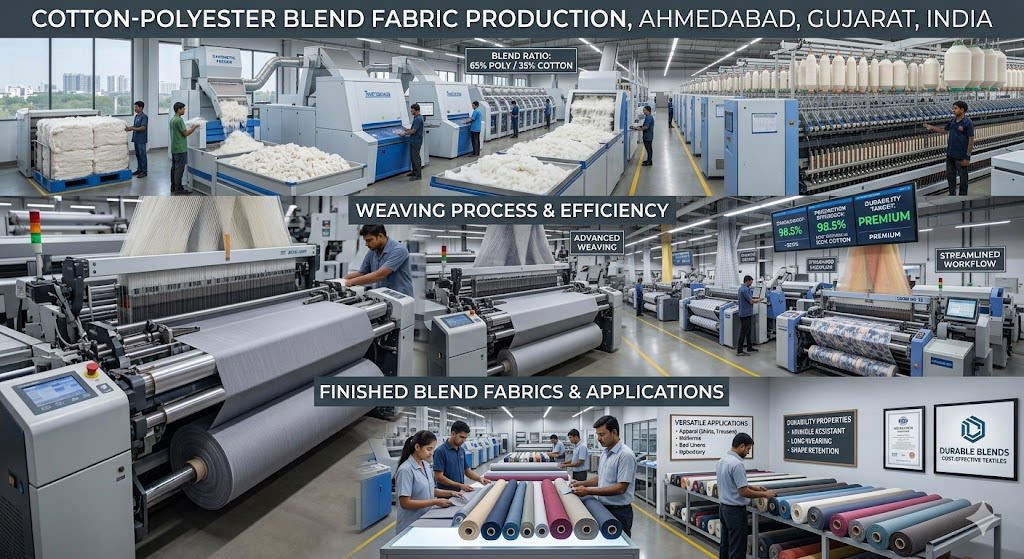
A Clearer RFQ Creates a Better Fabric Shortlist
Before contacting a supplier, prepare a concise fabric requirement: intended garment, fibre composition or target blend, GSM for woven or knit fabric, oz for denim, usable width, construction, colour, finish, stretch, quantity, sample need and delivery location. These details help separate suitable options from fabrics that only appear similar in a broad category.
Amrita Global Enterprises (AGE) is an Ahmedabad-based B2B fabric manufacturer and supplier serving garment manufacturers, apparel brands, buying houses, sourcing teams, wholesalers, fabric traders, importers and exporters. AGE can review blended-fabric requirements at inquiry level, including available options, sampling, MOQ, pricing and dispatch planning; each point must be confirmed for the exact fabric and order.
Use Send Fabric Inquiry and include your target specifications. A clear RFQ gives buyer and supplier a practical basis for sample evaluation, quotation and repeat-order planning without relying on generic claims about polyester blends.
