
Polyester blends are not automatically lower quality. Compare blend ratio, GSM or oz, construction, finish and end use before bulk sourcing.
Are polyester blends lower quality than pure fabrics?
No. Fabric quality is not decided by whether a material is pure or blended. For garment manufacturers, apparel brands and buying houses, the better question is whether the fabric matches the garment’s end use, care requirements, target price and production process. Polyester may contribute strength, shape retention and easier care, while cotton, viscose or another fibre can influence softness, absorbency, drape and comfort.
A blend can perform well when its fibre ratio, yarn, weight, construction and finish are appropriate for the application. It can also be unsuitable when buyers choose only by fibre name. Before bulk sourcing, review the specification rather than assuming that “pure” means premium or that “blend” means economical. AGE’s bulk fabric catalogue can help sourcing teams compare documented options before requesting samples.

What should B2B buyers check before selecting a blend?
Start with the garment brief, then assess the fabric as a complete construction. A cotton-polyester blend for uniforms may need a different balance of comfort, crease recovery and abrasion resistance than a lightweight shirting or fashion fabric. Buyers should confirm:
- Composition and blend ratio: the fibre percentage affects hand feel, care behaviour and performance.
- Weight: use GSM for woven or knitted blends and oz for denim blends; do not compare numbers without considering construction.
- Weave or knit: plain, twill and knitted structures can behave differently even with the same fibre content.
- Width, shade and finish: these influence marker planning, visual consistency and garment processing.
- Application and testing: sample for drape, stitching response, shrinkage expectations, colour behaviour and wash care before bulk approval.
A practical comparison is AGE’s 5.25 oz cotton-poly twill black denim fabric, where composition, denim weight, width, weave and finish are stated for buyer review. The fabric selection guide for bulk garment production provides a broader evaluation framework.
When is a polyester blend the practical sourcing choice?
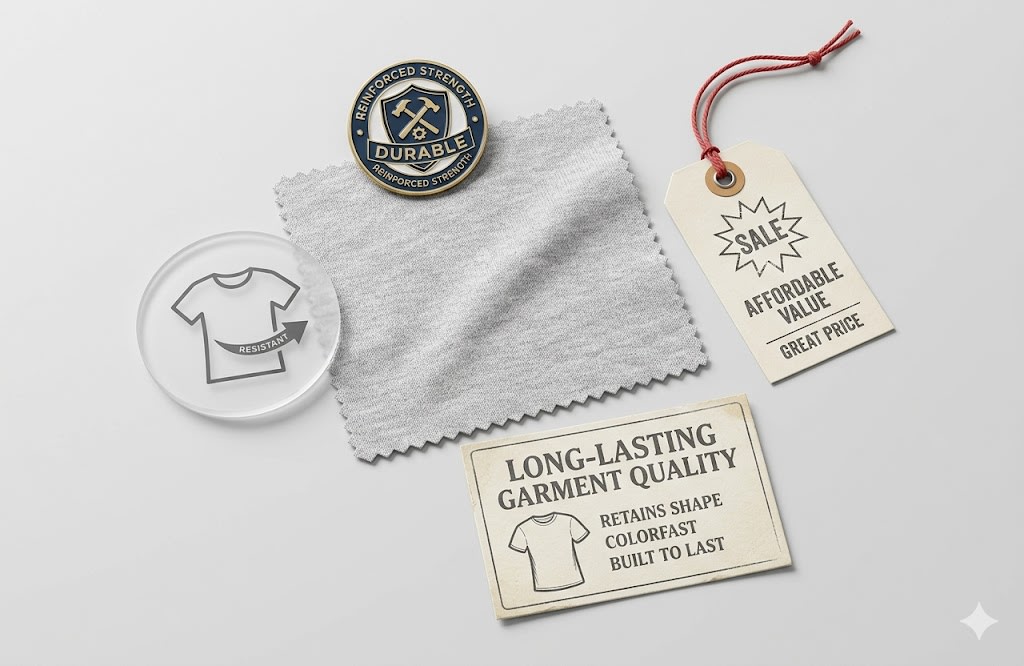
Polyester blends can suit uniforms, workwear, casualwear, sportswear and other repeat-use garments when buyers need a planned balance of comfort, durability, shape retention and care performance. Pure fabrics may be preferable where a specific natural-fibre handle, absorbency or brand requirement is central. Neither option is automatically better; the specification and end use decide.
For bulk procurement, ask suppliers to confirm the exact blend ratio, GSM or denim oz, width, construction, colour, finish, MOQ options, sampling process and dispatch plan. Do not treat “wrinkle resistant,” “moisture managing” or “low shrinkage” as guaranteed unless the relevant fabric specification or test evidence supports the claim. Amrita Global Enterprises (AGE) is an Ahmedabad-based B2B fabric manufacturer and supplier. Share the garment application, target specification, shade and quantity through Send Fabric Inquiry so availability, sampling, pricing and order details can be discussed.
